



Calendly and YouCanBook.me both kill the back-and-forth of booking a meeting, and a quick feature scan makes them look like the same product. The tell is in how they charge. Calendly bills per seat, which is what you do when you’re selling to teams and want every rep covered.
YouCanBook.me bills per calendar, which is what you do when your typical customer is one person running a couple of booking pages. That pricing choice is really a statement about who each tool is for.
Calendly leans toward sales teams and CRMs, with routing and round-robin built in. YouCanBook.me leans toward solo operators and small service businesses who care most about a booking page that looks like theirs. Both do online scheduling well; they just point in different directions.
What Is the Difference Between Calendly and YouCanBook.me?
At its core, Calendly is about shareable meeting links and team-level booking workflows, the self-serve model. YouCanBook.me comes at it from the client side instead: a calendar-connected booking page built for service businesses that want the whole thing branded as their own.
Both kill the manual back-and-forth, but they’re solving slightly different problems, and the choice really turns on whether you want a polished team workflow tool or a flexible, client-first booking page.
| Attribute | Calendly | YouCanBook.me |
|---|---|---|
| Core design focus | Meeting links and team workflows | Branded booking pages for clients |
| Primary audience | Sales teamsEnterprises | Small businessesSolo practitioners |
| Calendar model | Up to 6 connections paid | 1 per page freeMore on paid plans |
| Founded | 2013 | 2011 |
Calendly has grown into a full scheduling platform, with over 20 million users across 230+ countries and 100,000+ companies, and 150+ native integrations (Calendly, 2024).
YouCanBook.me crossed its 100 millionth total booking by the end of 2024, running at roughly 1 million bookings a month (YouCanBook.me, 2024).
The scheduling software market hit USD 469.1 million in 2024 and is projected to reach USD 1.13 billion by 2034, a 9.2% CAGR (Fact.MR, 2024). Both sit inside a fast-growing space where scheduling automation is turning into table stakes for almost any service business.
How Do Calendly and YouCanBook.me Handle Calendar Integration?
Calendar integration is where the two split most sharply. Calendly does multi-calendar conflict detection across up to 6 connected accounts on paid plans. YouCanBook.me ties each booking page to one Google, Microsoft or Apple calendar and checks that one in real time for clashes.
How Calendly Handles Multi-Calendar Conflict Detection
Calendly checks every connected calendar at once before it shows a booker any open slots. If a time’s blocked on any one account, it just drops off the booking page.
- It works with Google Calendar, Outlook and Office 365.
- It dropped Apple Calendar/iCloud support for new users in August 2024 (Zeeg, 2024).
- Existing iCloud connections still run; new users just can’t set one up.
- Paid plans allow up to 6 calendar connections for conflict checking.
That matters for anyone juggling more than one account. A recruiter with a personal Gmail and a work Outlook can connect both and let Calendly sort the conflicts out.
How YouCanBook.me Syncs with Google and Microsoft Calendars
The architecture here is single-calendar. Each booking page connects to exactly one calendar, that calendar sets availability, and confirmed bookings write straight back into it.
It keeps full Apple Calendar/iCloud support next to Google and Microsoft, which is a genuine edge over Calendly for anyone living inside the Apple ecosystem (Zeeg, 2024).
The trade-off is real, though. Anyone running two active calendars, which is common for consultants with a personal account and a client-work one, can’t merge them into a single availability check. You’d be looking at separate booking pages or some workaround.
For teams paying attention to how Google Calendar and Outlook sync behaves across tools, this is worth understanding before you commit to either.
How Do the Booking Page Customization Options Compare?
YouCanBook.me hands you a lot more visual control over the booking experience, while Calendly keeps its better design tools behind the higher tiers.
YouCanBook.me Booking Page Customization
Every paid plan includes custom branding, logo uploads, background images, colour controls and custom CSS. The editor gives you a live preview while you build, so you see exactly what clients will see before you publish.
Each page is self-contained, so different pages can carry their own branding, forms and assigned team members without stepping on each other (YouCanBook.me, 2024).
Custom form fields and conditional logic both come on paid plans, which helps service businesses that need to collect details like service type, location or budget range before they confirm a slot.
Calendly Booking Page Customization
Calendly’s customization is more modular. You build event types in one place and handle notifications over in a separate Workflows section. It works, but it’s less unified than YouCanBook.me’s single-page editor.
The branding controls, logo and colour, are limited to Teams and Enterprise. On Standard, Calendly’s own branding shows on your booking pages.
- There’s no conditional logic in booking forms on any plan.
- Custom questions are available from Standard up.
- White-label booking page URLs need the higher tiers.
For an agency building booking pages for clients, or any business that wants the booking experience to feel like part of its brand, YouCanBook.me gives you more for less. Calendly catches up at enterprise level, but you pay more to get there.
The same gap turns up in related tools. Businesses comparing scheduling software for small businesses consistently put branding flexibility among their top few deciding factors.
How Do Calendly and YouCanBook.me Handle Team Scheduling?
For teams, Calendly is the stronger tool. Round-robin assignment, routing forms and CRM-linked scheduling are all built for sales and support at scale. YouCanBook.me does team booking pages but doesn’t have the routing depth a higher-volume team needs.
Calendly Round-Robin and Collective Events
Calendly has a few core team meeting types. Round-robin auto-assigns whoever’s available, collective requires every listed member to be free, and group lets multiple invitees book the same slot.
Routing forms, on the Teams plan and up, push this further. Bookers answer a few qualifying questions, and Calendly sends them to the right team member or event type based on the answers. Sales teams use it to assign inbound leads without lifting a finger.
HubSpot data has sales reps spending only 28% of their time actually selling, with the rest going to admin like scheduling and CRM updates (HubSpot, 2024). Routing and round-robin cut straight into that overhead.
YouCanBook.me Team Booking Pages
Team booking in YouCanBook.me runs through shared booking pages with round-robin assignment, set up by hand. There’s no equivalent to Calendly’s form-based routing.
Each page can have its own assigned members, branding and availability rules, which works cleanly for a small team running separate service lines. Point a sales team routing 50+ inbound leads a day at it, though, and it falls short.
| Feature | Calendly | YouCanBook.me |
|---|---|---|
| Round-robin assignment | Yes native | Yes manual setup |
| Collective events | Yes | No |
| Routing forms | Yes Teams plan | No |
| CRM-based routing | SalesforceHubSpot | No native option |
Teams running employee scheduling apps alongside a booking tool will find Calendly’s team features slot more cleanly into an existing HR and sales stack.
How Does Pricing Compare Between Calendly and YouCanBook.me?
Both have a free tier. The paid structures are different enough that which one’s better value depends entirely on your team size and how many calendar connections you need.
Calendly Pricing Plans
The free plan gives you one event type, unlimited meetings and basic integrations. Fine for a single use case, limiting the moment you need more than one meeting type.
The paid plans, as of 2025:
- Standard at $10/seat/month (billed annually), with unlimited event types and basic integrations.
- Teams at $16/seat/month, adding routing forms, round-robin, and Salesforce and HubSpot integrations.
- Enterprise at custom pricing, with a dedicated domain, advanced provisioning and the full Salesforce suite.
Because it’s per seat, the cost scales straight with headcount. A 10-person team on the Teams plan is at $160/month minimum.
YouCanBook.me Pricing Plans
YouCanBook.me prices per calendar rather than per seat, and that’s the structural thing that makes it cheaper for solo users and small teams.
The paid plans, as of 2025:
- Individual at $9/month: 2 calendar connections, 2 booking pages, full customization, custom notifications.
- Professional at $13/month: 6 calendars, 10 booking pages, unlimited workflows, HubSpot integration, accept/reject bookings.
- Teams at $18/month per user: round-robin, centralized billing, role-based access.
Paying annually takes off 10%, and a two-year commitment takes off 20%.
Worth flagging: YouCanBook.me charges per SMS credit for reminders (less than 1 cent a message in the US) and takes a 1% commission on every Stripe transaction, even cancelled bookings that get refunded. Calendly’s paid plans bundle SMS reminders with no per-message fee and take no commission on payments.
For a solo consultant or small service business on fewer than 5 calendars, YouCanBook.me is meaningfully cheaper. A 20-person sales team that needs routing and CRM sync is a different story, where Calendly’s per-seat pricing starts to look competitive once you count what each seat actually unlocks.
What Integrations Do Calendly and YouCanBook.me Support?
Calendly has the broader native integration library. YouCanBook.me covers the core tools and leans on Zapier for anything past its direct connections.
Calendly Native Integrations
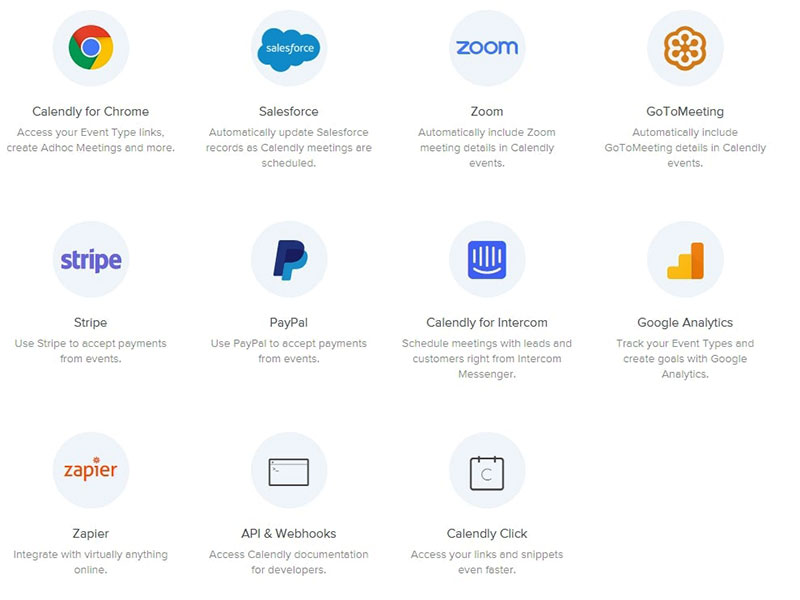
Calendly supports 150+ native integrations as of 2024. The ones that matter most for business scheduling:
- Video conferencing through Zoom, Google Meet, Microsoft Teams and Webex.
- CRM through Salesforce (Teams and up), HubSpot (Standard and up) and Marketo.
- Communication through Slack and Microsoft Teams notifications.
- Payments through Stripe and PayPal.
- Automation through Zapier and Make (formerly Integromat).
The Salesforce integration writes booking data straight into CRM records, with no Zapier in the middle, which is a real operational difference for revenue teams that live in Salesforce all day.
YouCanBook.me Native Integrations
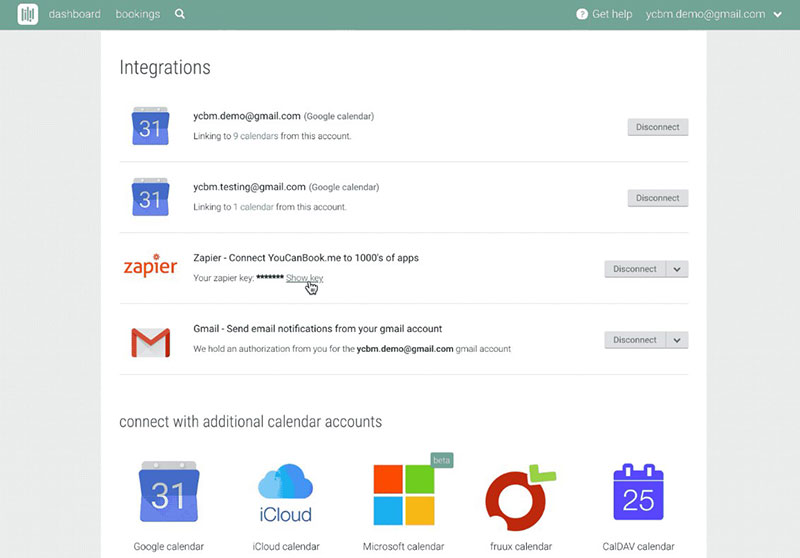
Its native connections cover Zoom, Google Meet, Microsoft Teams, Stripe, PayPal and Zapier, and HubSpot comes natively on the Professional plan ($13/month).
Salesforce, though, is only reachable through Zapier, which adds a dependency and a monthly cost for teams that need CRM sync, and a few more places the workflow can break.
| Integration | Calendly | YouCanBook.me |
|---|---|---|
| Salesforce | Native Teams+ | Via Zapier only |
| HubSpot | Native Standard+ | Native Professional+ |
| Apple Calendar | No new users | Yes, fully supported |
| PayPal payments | Yes, native | Yes, native |
Businesses already running a WordPress booking system with payment gateways next to one of these tools should check whether their payment processor is natively supported before they wire anything up.
On the Zoom side specifically, both handle it natively and well. Book a Zoom call through either one and the meeting link is generated automatically and dropped into the calendar invite for both people.
How Do Automated Reminders and Follow-Ups Work on Each Platform?
No-shows cost small and medium-sized businesses an average of $26,000 a year in lost revenue (10to8 via FinancesOnline). Automated reminders are the most direct way to pull that number down, and the two platforms go about them very differently.
Calendly Reminders and Workflows
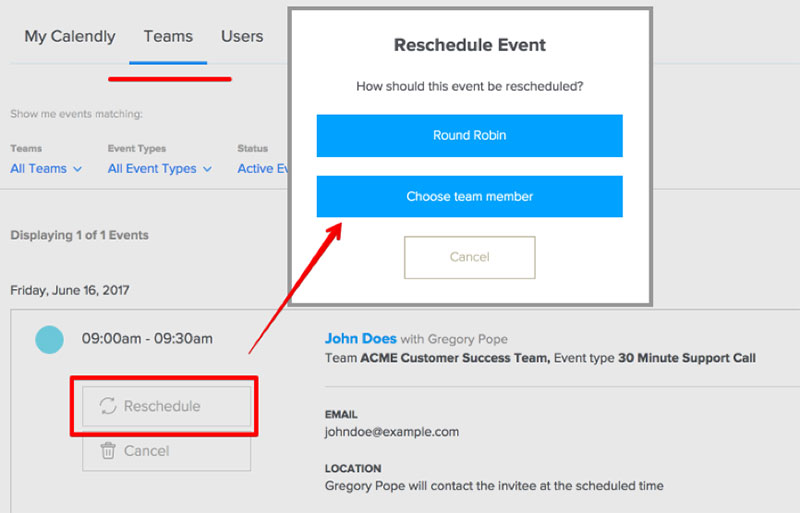
Calendly runs all reminders and follow-ups through its Workflows section. Email reminders come on Standard and up, and SMS reminders are included on every paid plan with no per-message fee.
The things you can automate:
- Pre-meeting email reminders with custom timing.
- SMS reminders on any paid plan.
- Post-meeting follow-up emails.
- Cancellation and reschedule notifications.
The catch is flexibility. The reminder templates are fairly rigid: you can change the message text, but the timing options and conditional logic are thin next to YouCanBook.me’s.
YouCanBook.me Reminders and Notifications
This is where YouCanBook.me pulls ahead. Each booking page gets its own fully independent notification sequence, with custom timing rules at every step.
You can fire reminders 24 hours before, an hour before, or at any interval you set, and different booking page types can run completely different reminder sequences side by side.
SMS reminders are there but billed per message (under 1 cent each in the US). Send 500 a month and that’s a small amount on top of the subscription. Calendly folds SMS reminders into the plan price.
Service businesses where the relationship drives repeat bookings, the therapists, coaches and personal trainers, tend to find that notification control worth the extra complexity. For how reminder tools fit into a wider consultant scheduling software stack, this flexibility gap is one of the cleaner ways the two pull apart. It also helps to have a solid appointment confirmation text strategy in place regardless of which platform you pick.
How Do Calendly and YouCanBook.me Handle Payments?
Both collect payment at the time of booking through Stripe, with full payment upfront being the structure each handles out of the box.
Payment Collection on Calendly
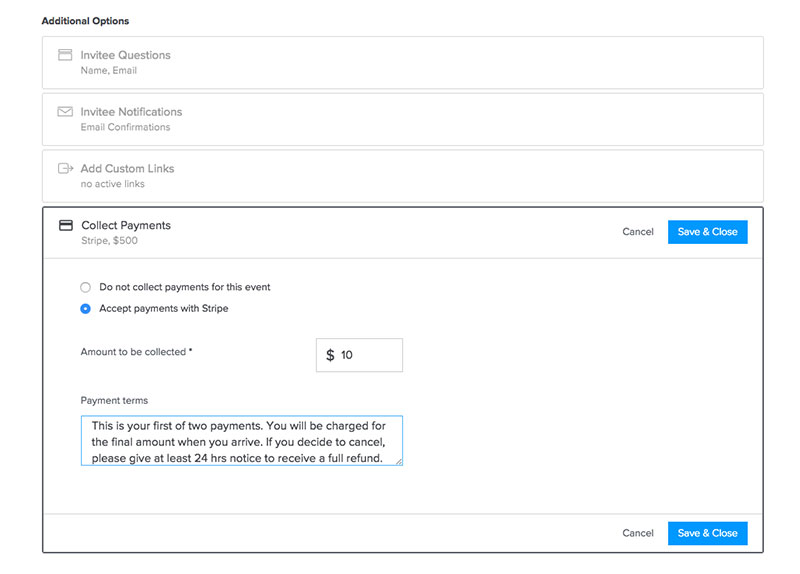
Calendly takes payment through Stripe and PayPal, available on all paid plans as of 2024 (Zeeg, 2024).
Through Stripe, Calendly handles:
- Credit and debit cards, plus Apple Pay, Google Pay, Klarna and Affirm at checkout.
- Fixed-price events only, since variable pricing isn’t supported (Calendly Community, 2024).
- Coupon codes with percentage or flat-rate discounts.
- Meeting packages for pre-paid multi-session bundles (in private beta as of 2024).
It doesn’t calculate VAT or sales tax, and refunds and cancellation enforcement happen outside Calendly, directly in Stripe or PayPal (Calendly Help, 2024).
Immigration attorney Daniel Larson uses the Stripe integration to book and charge for legal consultations, and says pairing scheduling with payment collection took a lot of admin off his solo practice (Calendly, 2024).
Payment Collection on YouCanBook.me
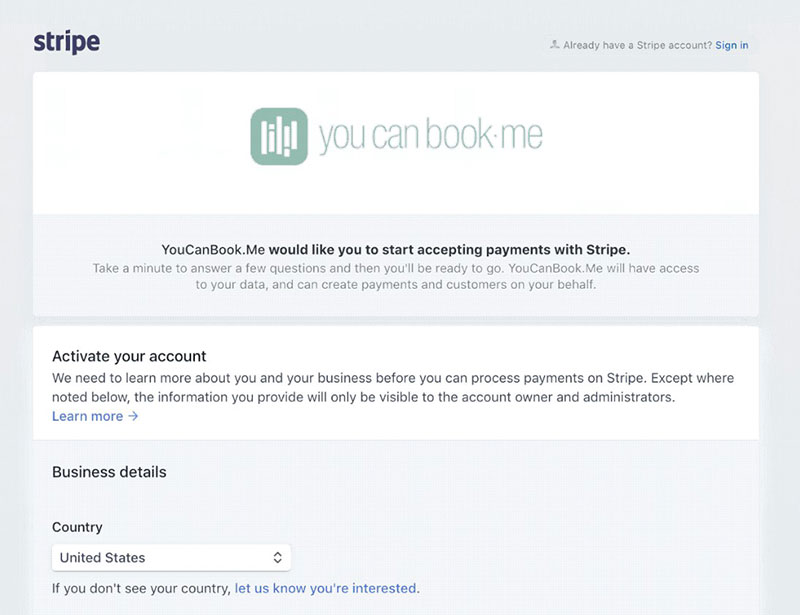
YouCanBook.me takes payment natively through both Stripe and PayPal.
It also takes a 1% commission on every Stripe transaction, including bookings that later get cancelled and refunded. Calendly charges no commission on payments run through its integrations (Calendly, 2024).
On $5,000/month in booking payments, that commission is another $50/month on top of the subscription. Small at low volume, more noticeable as revenue climbs.
Both also support Apple Pay and Google Pay at checkout through Stripe. Neither does offline payment or in-person terminals, so a business that needs those should look at something like a PayPal-connected booking system or a platform with native POS.
Which Platform Is Better for Specific Use Cases?
Calendly is used by 86% of Fortune 500 companies as of June 2024, with over 20 million users across 230+ countries (Contrary Research, 2024). YouCanBook.me crossed 100 million total bookings by the end of 2024, with a user base concentrated in small and service-based businesses.
Those numbers point to genuinely different audiences, not just marketing.
When to Choose Calendly
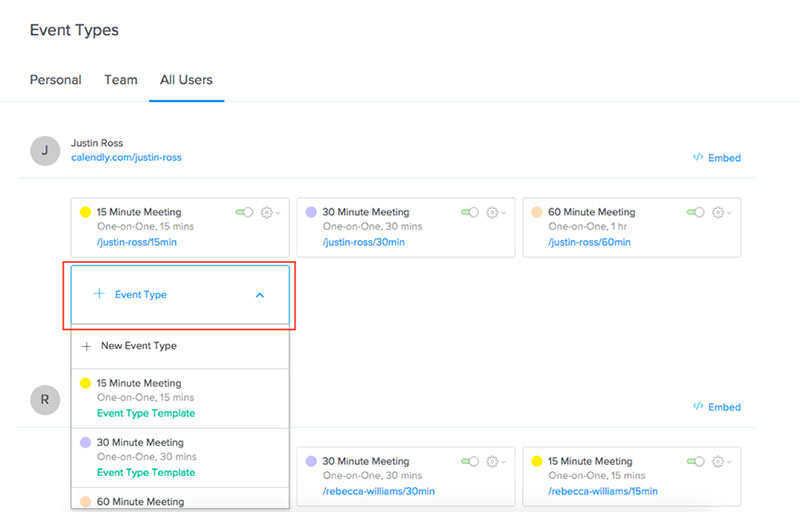
Calendly is the right pick when the volume is high, the team is large, or CRM sync isn’t optional.
It’s the best fit for:
- Sales teams routing inbound leads through Salesforce or HubSpot.
- Recruiting teams handling high-volume interview scheduling with round-robin assignment.
- Organizations that need routing forms to qualify and direct bookers automatically.
- Teams of 5 or more, where per-seat pricing is justified by the feature depth.
Atlassian, Dropbox, Lyft and Crocs all have published case studies with Calendly (Contrary Research, 2024). These are companies coordinating complex scheduling across large teams, not solo practitioners booking client calls.
When to Choose YouCanBook.me
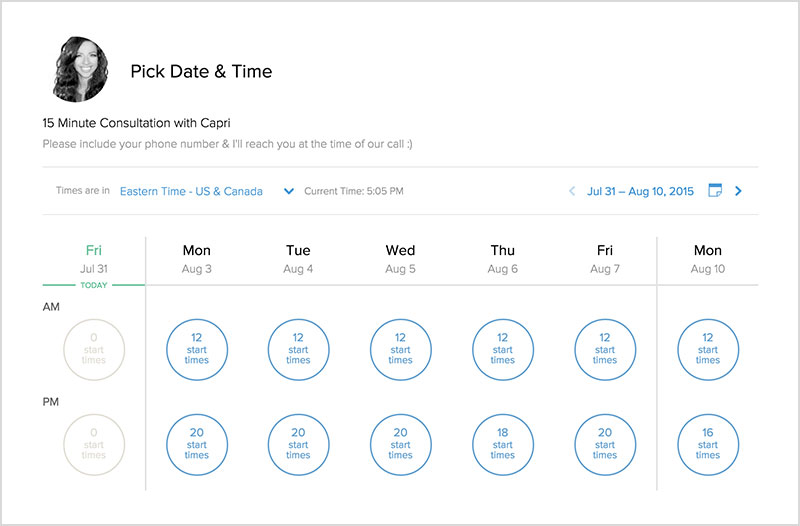
A Forrester Total Economic Impact study commissioned by Calendly put ROI at 318% for organizations using it, but that study was built around enterprise use cases. The math reads differently for a solo consultant or a five-person service team, where YouCanBook.me is $9/month against Calendly’s $10/seat minimum.
YouCanBook.me is the better fit when:
- The booking page needs to look like your brand, not a Calendly template.
- You run on Apple Calendar/iCloud and want native sync.
- Notification timing and custom reminder sequences matter more than CRM routing.
- You’re a solo practitioner, coach, consultant or small service team on a tight budget.
Coaches, therapists, recruiters and freelancers turn up again and again in its customer base. The per-calendar model rewards exactly that crowd.
| Use Case | Better Choice | Key Reason |
|---|---|---|
| Sales team with Salesforce | Calendly | Native CRM routing |
| Solo consultant or coach | YouCanBook.me | Lower cost, better branding |
| Apple Calendar users | YouCanBook.me | Full iCloud support |
| High-volume recruiting | Calendly | Round-robin, routing forms |
| Service business 1–5 people | YouCanBook.me | Per-calendar pricing |
A business taking a service operation online for the first time can manage either one. The decision usually narrows to a single question: does the booking page need to convert clients, or does the backend need to feed a CRM? If it’s the page, YouCanBook.me; if it’s the CRM, Calendly. Either way, understanding the benefits of scheduling automation before you pick a tool makes the trade-offs easier to weigh.
What Are the Limitations of Calendly and YouCanBook.me?
Neither one is without trade-offs. They matter more as you scale, and some are architectural, which means no plan upgrade is going to fix them.
Calendly Limitations
Calendly took first place in G2’s 2024 Fall Report for Online Appointment Scheduling, with ease of use leading the positive sentiment across 819 reviews. The criticisms that came up most were missing features in the free version (54 mentions), calendar syncing issues (46 mentions) and pricing concerns (38 mentions) (Technology Checker, 2024).
The structural limits worth knowing before you commit:
- No conditional logic in booking forms on any plan.
- iCloud Calendar connections discontinued for new users in August 2024.
- No native variable pricing through Stripe or PayPal.
- Branding controls locked behind the Teams plan ($16/seat/month).
- Analytics dashboard limited to the Standard plan and above.
The per-seat model is the complaint you hear most from growing teams. A 10-person team on the Teams plan pays $160/month, and once you add Salesforce routing and enterprise features the cost climbs quickly. Teams that outgrow it tend to look at Google Calendar alternatives or dedicated booking platforms for more flexibility.
YouCanBook.me Limitations
The single-calendar architecture is the biggest operational constraint. Capterra users who run both a personal and a work calendar flag it as their number-one pain point (Capterra, 2024).
What shows up in daily use:
- No native mobile app, where Calendly has dedicated iOS and Android ones (Zeeg, 2024).
- Analytics limited to the last day, week, month or quarter (Calendly blog, 2024).
- No native Salesforce integration, though HubSpot is native on the Professional plan.
- A 1% Stripe commission on all transactions, including refunded ones.
The analytics gap is real for anyone trying to read booking trends over a custom date range. The reporting covers the operational basics, but deeper conversion analysis means exporting to a spreadsheet and doing it by hand.
Teams that need more than either platform offers, multi-location service management, custom staff workflows, or a booking experience fully embedded in a WordPress site, are often better off with a dedicated WordPress booking plugin that handles those cases natively.
FAQ on Calendly vs YouCanBook.me
Is Calendly better than YouCanBook.me?
It depends on the use case. Calendly is better for sales teams that need CRM integration and routing logic, while YouCanBook.me is better for service businesses that want branded booking pages at a lower per-calendar price.
Which tool is cheaper for a solo user?
YouCanBook.me. Its paid plan starts at $9/month per calendar against Calendly’s $10/seat/month (billed annually). For one user with one calendar, it’s cheaper and includes more customization. If even $9/month is more than you want to spend to start, there are free WordPress booking plugins worth trying first.
Does YouCanBook.me support Apple Calendar?
Yes, with full iCloud sync. Calendly stopped offering Apple Calendar connections to new users in August 2024; existing users keep theirs, but new signups can’t add one.
Can both tools collect payments at booking?
Yes, both take Stripe and PayPal at booking. YouCanBook.me adds a 1% commission on every Stripe transaction, refunded ones included, while Calendly charges no commission on payments run through its integrations.
Does Calendly integrate with Salesforce?
Yes, natively from the Teams plan. YouCanBook.me has no native Salesforce link and needs Zapier in between, so for revenue teams working leads inside Salesforce, Calendly is the practical call.
Which platform has better booking page customization?
YouCanBook.me. It gives you custom CSS, logos, background images and conditional booking-form logic on paid plans. Calendly keeps most branding behind the Teams plan and has no conditional logic on any tier. If you want a fully custom booking form embedded in your own site rather than a hosted page, a WordPress plugin is worth considering alongside both tools.
Does YouCanBook.me have a mobile app?
No, it’s web-only as of 2024. Calendly has dedicated iOS and Android apps with full scheduling management, push notifications and calendar sync, so for managing bookings on the move, it’s the clear winner.
How does round-robin scheduling compare between the two?
Both do round-robin assignment. Calendly’s is more advanced, with routing forms that auto-assign bookers from their answers. YouCanBook.me does round-robin through manual team-page setup, with no built-in routing logic. For teams with more complex multi-person scheduling needs, it’s worth looking at dedicated group scheduling apps before committing to either.
Which tool has better analytics?
Calendly. It gives you custom date ranges, conversion tracking and team performance metrics. YouCanBook.me only shows the last day, week, month or quarter, so anything deeper means exporting to a spreadsheet.
Can I use both tools for free?
Yes. Both have free plans with no time limit. Calendly’s covers one event type; YouCanBook.me’s covers one booking page with its branding showing. Both also run 14-day trials of the paid features.
Conclusion
This conclusion is for an article presenting the key differences in the Calendly vs YouCanBook.me comparison, and the answer comes down to what your workflow actually needs.
If you run a sales team that depends on Salesforce routing, round-robin assignment, and CRM sync, Calendly is the stronger tool.
If you need a branded booking page, full iCloud support, and flexible notification sequences at a lower cost, YouCanBook.me delivers more per dollar for solo users and small service businesses.
Both platforms reduce no-shows through automated reminders and handle two-way calendar sync well. Neither supports variable pricing or deposit-based payment collection natively.
Match the tool to your scheduling workflow, not the other way around.

Explore topics

Read Inspiring Customer Stories
Check out how our user set Amelia for his business