



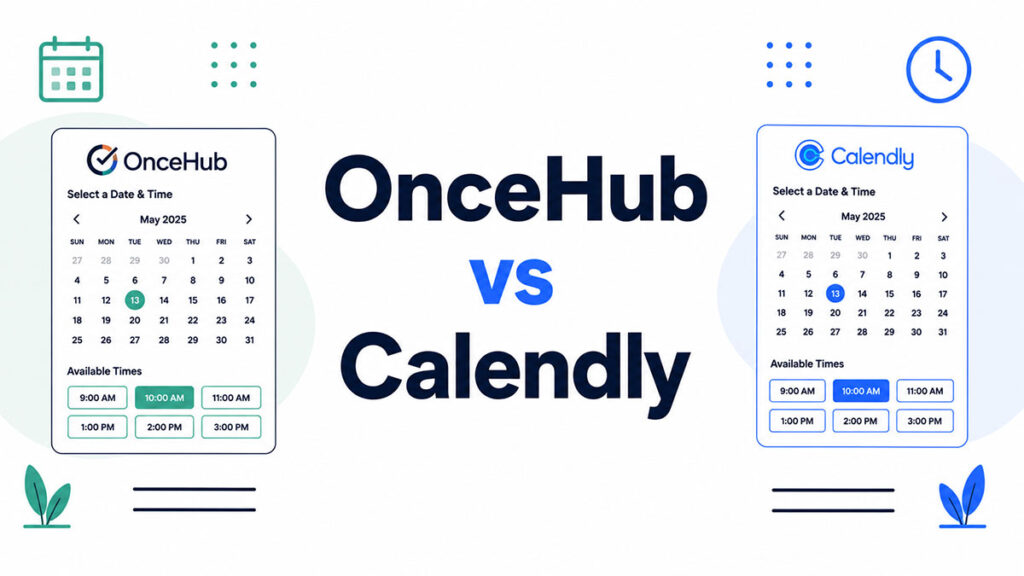
Most people have clicked a Calendly link without ever signing up for anything. Someone sends you one, you pick a time, you’re done. That reach is why Calendly is usually the first name out when someone says “scheduling tool.” OnceHub runs the opposite way: plenty of people have never laid eyes on it, because it tends to work behind the scenes, deciding which sales rep an inbound lead lands with.
So this isn’t two near-identical tools fighting over the same desk. One is the booking link almost everyone already recognizes; the other is a specialist that earns its keep inside B2B sales teams. Both connect to Google Calendar, Zoom, Salesforce, and HubSpot, and both do the basics. The split shows up in how much lead-routing and CRM logic you need wrapped around the booking.
What Is OnceHub?
Built by OnceHub, OnceHub aims at B2B sales teams and customer-facing operations that need more than a booking link. It runs automated lead routing, CRM assignment workflows, and multi-step booking flows that most scheduling tools skip.
The product moved under the OnceHub brand but held onto the OnceHub name across most integrations and documentation. That matters when you’re wiring up Salesforce or HubSpot, where OnceHub is still the name in the app directory.
Who Uses OnceHub
The core users are sales development reps, customer success teams, and enterprise operations managers.
The 91% of OnceHub reviewers who name appointment scheduling as their main use case tend to lean on the routing logic too, letting it send meetings to the right rep automatically (GetApp, 2024). That routing layer is what sets OnceHub apart from simpler booking tools.
It turns up most in financial services, healthcare, university admissions, and B2B SaaS, all of which share one trait: enough inbound meeting volume that assigning reps by hand becomes a bottleneck.
Key Native Integrations
On the calendar side it syncs with Google Calendar, Microsoft Outlook, and Apple Calendar (worth noting, Calendly dropped Apple Calendar support for new users in August 2024).
For CRM it connects to Salesforce, HubSpot, and Keap natively, while Pipedrive, Zoho, and Dynamics 365 go through Zapier or webhooks.
Video and payments cover Zoom, Stripe, and PayPal, plus thousands of other tools through Zapier and Make.
Its Salesforce integration creates leads, contacts, and tasks straight from OnceHub’s chatbot, something Calendly’s connector doesn’t do out of the box.
What Is Calendly?
Tope Awotona founded Calendly in 2013, and the platform has always done one thing very well: kill the back-and-forth of scheduling emails by handing out a link tied to your real-time availability.
More than 20 million users across 230+ countries are on it today, per Calendly’s own fact sheet (2024), which makes it the most recognized name in the category by a wide margin.
How Calendly Grew
It went from 120,000 users in 2015 to 10 million by 2022, almost entirely on word-of-mouth and a product-led growth loop. Get a Calendly link from someone and there’s a good chance you end up making your own account soon after.
Calendly holds roughly 32.94% market share in the appointments and scheduling category as of 2026, with over 163,000 tracked companies using it (6sense, 2026), and its valuation sits above $3 billion.
Revenue reached about $270 million in 2023 (calendarinvite.com, 2025), putting it well ahead of most alternatives on pure commercial scale.
Core Meeting Types Supported
- One-on-one booking, the standard single-host slot with automatic calendar sync.
- Round-robin, which spreads meetings across available team members by availability or equal distribution.
- Collective, where every required host has to be free for a slot to show, used for panel interviews or multi-stakeholder calls.
- Group, one host with multiple invitees booking the same time.
OnceHub does round-robin and one-on-one natively, but has no group meeting type to match Calendly’s.
How Do OnceHub and Calendly Differ in Core Features?
Both handle booking pages, calendar sync, buffer times, and automated confirmation emails. The divergence is in how deep the routing logic goes and how simple things are out of the box.
G2’s head-to-head numbers are clear on setup. Calendly scores 9.4 on ease of use against OnceHub’s 8.6, and 9.1 on ease of setup against 8.2 (G2, 2024). Those aren’t small gaps.
Booking Flow Customization
Calendly gets a live booking link published in under 5 minutes. A visual editor covers event type setup, availability rules, and confirmation settings, no documentation required.
OnceHub takes longer to set up, and what you get for it is multi-step booking flows with conditional intake forms built right into the process. A visitor filling out a form can be sent to different reps based on their answers, before the booking page even loads. Building the same logic in Calendly means bringing in third-party form tools.
Meeting Distribution and Routing Logic
| Feature | Calendly | OnceHub |
|---|---|---|
| Round-robin scheduling | Yes availability or equal distribution | Yes priority weighting |
| Conditional routing | Basic routing forms | Advanced CRM field matching |
| Territory-based assignment | No | Yes |
| Group meeting type | Yes | No |
| Apple Calendar sync | Discontinued new users Aug 2024 | Yes |
OnceHub’s priority matching scores 9.2 on G2 against Calendly’s 7.8, a gap that maps straight onto its deeper routing architecture (G2, 2024).
Calendar Integrations Supported
Calendly connects to Google Calendar, Outlook, Office 365, iCloud (existing connections only), and Exchange, with multi-calendar detection guarding against double bookings across up to 6 connected calendars on paid plans.
OnceHub covers Google Calendar, Outlook, and Apple Calendar. Its multi-calendar integration scores 7.8 on G2 against Calendly’s 9.0, which points to Calendly handling cross-calendar conflict detection more reliably for most people.
How Does Pricing Compare Between OnceHub and Calendly?
Both start with a free option, but the structures aren’t the same. Calendly’s Free plan is permanent. OnceHub gives you a 14-day trial of the paid features, then drops you to a basic free tier.
Calendly Pricing Breakdown
Calendly prices per seat, with tiers running like this (as of 2025):
| Plan | Monthly (billed annually) | Key Features |
|---|---|---|
| Free | $0 | 1 event type, 1 calendar connection |
| Standard | $10 /seat /mo |
Unlimited event types, Stripe/PayPal, workflows |
| Teams | $16 /seat /mo |
Round-robin, Salesforce, admin controls |
| Enterprise | Custom $15,000+ /yr |
SSO, SCIM, audit logs, dedicated support |
A 10-person team on the Teams plan runs $1,920 a year on annual billing (Calfrenzy, 2025), and paying annually saves roughly 20% over monthly rates.
OnceHub Pricing Breakdown
OnceHub charges $10/user/month on the Starter plan and $18/user/month on Growth. The Security add-on (SSO, HIPAA BAA) is another $5 to $6/seat/month, which lands at a far lower entry point than Calendly’s $15,000/year Enterprise floor (Prospeo, 2025).
For a team that specifically needs HIPAA compliance, OnceHub gets you there well below what Calendly’s Enterprise tier asks.
Which Is Cheaper for Small Teams
For teams of 10 or fewer without complex routing needs, Calendly wins on cost. The Free plan covers solo schedulers outright, and Standard at $10/seat/month handles most SMB cases for less than OnceHub’s equivalent paid tier.
The math flips at enterprise scale, where OnceHub’s routing automation cuts enough RevOps overhead to offset the per-seat difference. Small teams looking to keep costs down might also compare against a free WordPress booking plugin before committing to either platform.
Which Platform Has Better CRM and Sales Tool Integration?
For revenue teams, CRM integration depth is the decision factor that matters most. Both connect to Salesforce and HubSpot natively; what each connection actually does is where they split.
Salesforce Integration
OnceHub creates leads, contacts, and opportunities directly, with field mapping, task creation from its chatbot, and territory-based assignment tied to Salesforce records.
Calendly creates activity records and leads, and its Salesforce routing lookup is Enterprise-only. The integration logs meetings well, but it won’t match OnceHub’s opportunity-level automation without extra configuration on the Salesforce side.
If you’re running inbound demo requests and meetings need to log against open opportunities, OnceHub’s Salesforce connector does more without custom setup.
HubSpot and Payment Integration
Both connect to HubSpot natively, but OnceHub pushes meeting data to deal records more reliably out of the box. Calendly’s version handles contact creation and meeting logging; deal-level sync takes more manual configuration.
Calendly connects to Stripe to collect payment at the time of booking, which OnceHub doesn’t match natively. For consultants, coaches, and service businesses that take payment as someone books, that’s a real functional gap. There’s more on consultant scheduling software options that handle this combination.
Calendly supports 150+ native integrations against OnceHub’s smaller library, where anything outside Salesforce and HubSpot tends to route through Zapier or Make.
How Do the User Interfaces Compare?
Interface quality shapes day-to-day usability more than any feature list. A tool that needs 20 minutes to set up a new event type is losing the time it was meant to save.
Calendly’s ease of use scores 9.4/10 on G2 across 2,641+ verified reviews. OnceHub scores 8.6 from 55, a review-volume gap of about 48x that says as much about market adoption as anything (G2, 2024).
Calendly’s Interface
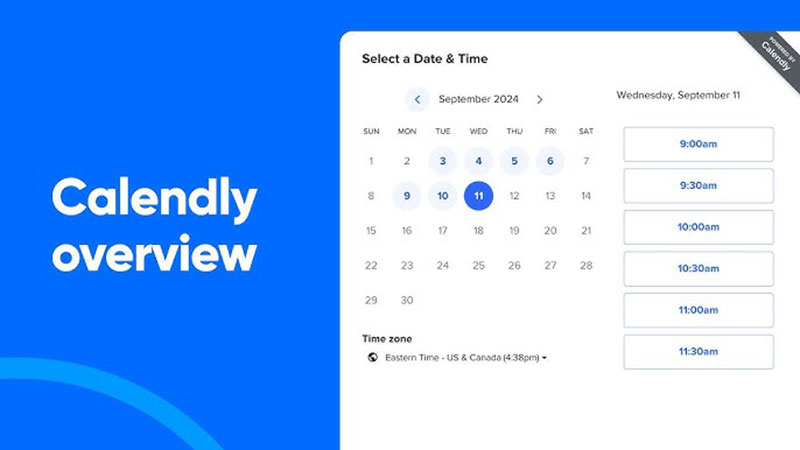
The booking page editor is visual and plain. A new user can set availability rules, add buffer times, connect Zoom, and publish a link without opening a help article. None of that is an accident; Calendly’s whole product-led growth model rests on people activating in minutes, not hours.
The complaints G2 reviewers do raise tend to be calendar syncing issues (46 mentions) and cost at scale (38 mentions). The interface itself rarely lands on that list.
OnceHub’s Interface
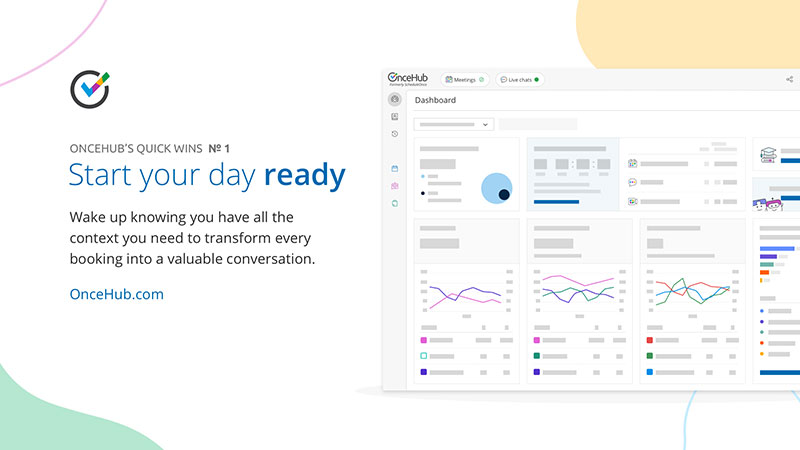
The admin panel is more powerful and noticeably more complex. Options sit buried in menus, the configuration terms aren’t always consistent, and the booking-page theme designer feels dated (Capterra, 2024).
Several Capterra reviewers get at the same thing: it looks like a simple booking tool on the surface, with a full workflow system sitting underneath. That depth is useful, but the learning curve is real, and OnceHub’s own support team acknowledges it in public responses to reviews.
It does score higher on custom booking page customization at 9.1, and its confirmations and reminders feature scores 9.6 against Calendly’s 9.4 (G2, 2024). So it isn’t uniformly worse on UX, just steeper to configure at the start.
Which Platform Performs Better for Enterprise Teams?
The appointment scheduling software market was worth $332.8 million in 2024 and is projected to reach $891 million by 2032, a 13.10% CAGR (Verified Market Research, 2025). Enterprise adoption is a big share of that growth, and both platforms are chasing it directly.
OnceHub Enterprise Capabilities
OnceHub was built with complex routing in mind. Territory-based assignment, weighted round-robin, overflow rules, and shared team inboxes are all native, not add-ons.
For regulated industries, OnceHub keeps compliance with GDPR, FINRA, HIPAA, and FERPA. The HIPAA BAA comes through the Security add-on at $5 to $6/seat/month, which keeps enterprise healthcare and financial services deployments within reach without a $15,000/year contract.
Enterprise reviewers on Capterra repeatedly point to OnceHub’s ISO27001 certification and HIPAA documentation as the tiebreaker in vendor evaluations against Calendly and Acuity Scheduling.
Calendly Enterprise Capabilities
Calendly’s Enterprise tier adds SSO (SAML), SCIM provisioning, audit logging, domain control, and dedicated implementation support. As of 2024 it posted a 61% year-over-year jump in enterprise growth (Calendly press release).
Routing logic gets better at Enterprise but stays simpler than OnceHub’s native architecture. A team past 50 reps that needs territory-based assignment tied to CRM records will find Calendly’s routing less configurable, even at that tier.
Both carry SOC 2 Type II certification and GDPR compliance, so for general enterprise security needs, both clear the bar. What separates them is routing depth and how fast the compliance documentation comes, where OnceHub has a structural edge in regulated industries.
How Do OnceHub and Calendly Handle Team Scheduling?
Team scheduling is where the two start to look really different, not just in depth but in design philosophy.
Calendly holds roughly 32.94% market share in the category with over 163,000 tracked companies, against OnceHub’s roughly 1.39% and 6,977 customers (6sense, 2024 to 2026). The gap shows how many more teams have rolled out Calendly for standard group scheduling.
Calendly Team Meeting Options
For teams, Calendly has a few native meeting types.
- Round-robin auto-assigns the next available rep, by availability or equal distribution.
- Collective requires all hosts free at once, for panel interviews and multi-stakeholder demos.
- Group puts one host with multiple invitees on the same slot, for webinars and office hours.
On the Teams plan, admins see and manage every member’s calendar from one dashboard, and Managed Workflows let them standardize reminder sequences across the whole team.
OnceHub Team Meeting Options
OnceHub distributes bookings through Resource pools. Round-robin takes the next member in line, pooled availability hands the booking to whoever’s been idle longest, and priority weighting lets managers steer more bookings toward specific reps.
The gap to know: OnceHub has no native group meeting type to match Calendly’s. Multi-host meetings where everyone has to attend run through multi-member booking pools, which take more configuration than Calendly’s collective event type.
Both detect and show time zones automatically, which is non-negotiable for teams spread across regions.
| Feature | Calendly | OnceHub |
|---|---|---|
| Round-robin | Yes equal or availability-based | Yes priority weighting |
| Collective event type | Yes native | No native equivalent |
| Group event multi-invitee | Yes | No |
| Admin calendar visibility | Full dashboard Teams plan | Per-pool visibility |
| Weighted distribution | No | Yes |
What Do Real Users Report About OnceHub and Calendly?
Review volume alone says something. Calendly holds 4.7/5 from 2,641+ G2 reviews; OnceHub (OnceHub) holds 4.4/5 from 55. That’s about a 48x gap, which tracks market adoption more than product quality (G2, 2024).
What Calendly Users Praise
On G2, the praise clusters around ease of use (171 mentions), ease of scheduling (139), and easy setup (130). All three point at the same thing: for most users, Calendly’s core promise works as advertised.
The complaints run to calendar syncing issues (46 mentions), cost on paid plans (38 mentions), and limited routing customization. On the upside, 88% of sales professionals reported fewer no-shows using Calendly’s reminder Workflows, per Calendly’s internal data (Zeeg, 2026).
What OnceHub Users Praise
Capterra users keep coming back to a few things:
- Routing flexibility for complex team workflows.
- Follow-up automation they say can’t really be replicated.
- ISO 27001 and HIPAA compliance documentation available on request.
The criticism that repeats most is that setup isn’t intuitive and takes some hand-holding to get through. OnceHub’s support team owns this in public replies to Capterra reviews and invites users into product feedback sessions (Capterra, 2024).
Switching Patterns Between the Two
People moving from Calendly to OnceHub mostly cite two things: CRM automation requirements and territory-based routing that Calendly’s Teams plan doesn’t support natively.
Going the other way, the reasons are interface frustration and price. One documented Capterra case had a team running both at once, Calendly for basic bookings and OnceHub for double-booking logic Calendly couldn’t reproduce.
Which Use Cases Fit OnceHub Better Than Calendly?
OnceHub isn’t for everyone. But for certain workflows it’s the only thing that works without duct-taping a stack of other tools together.
Inbound Sales and Lead Routing
A large SaaS vendor fielding inbound demo requests across 40+ reps needs more than round-robin. Territory matching, product-line routing, and CRM opportunity creation at the moment of booking are all native here.
Calendly’s routing forms handle basic qualification. OnceHub’s conditional flows go further, where a visitor’s answers can decide not only which rep they see but whether they’re offered a booking at all, which keeps unqualified leads from eating rep time. Run B2B appointment setting at volume and that distinction matters.
Regulated Industries With Compliance Requirements
OnceHub’s compliance coverage runs to GDPR, FINRA, HIPAA, and FERPA, with the Security add-on at $5 to $6/seat/month covering SSO and the HIPAA BAA.
A team weighing the two for a healthcare or financial services rollout often lands on OnceHub because the compliance documentation is faster to produce. One documented Capterra case had a company pick it specifically because it could hand over ISO27001 documentation immediately, where Acuity Scheduling couldn’t.
Enterprise Operations With Complex Assignment Logic
Teams of 50+ reps where weighted distribution, overflow rules, and pooled availability all have to work together. OnceHub handles that at the routing layer; Calendly handles it at the event-type layer, which is less configurable at scale.
OnceHub now also runs AI-powered phone booking agents that answer calls and schedule meetings around the clock using the same routing logic as web bookings, something Calendly doesn’t offer natively (OnceHub, 2024).
Which Use Cases Fit Calendly Better Than OnceHub?
Calendly fits most use cases better, and that’s not a knock on OnceHub. It’s that most scheduling needs aren’t that complex.
Individual Professionals and Small Teams
Freelancers, coaches, consultants, recruiters. Calendly’s Free plan covers one meeting type with unlimited bookings and almost no setup friction.
A solo consultant can embed a booking form on their site, connect Stripe for payments, and be taking paid appointments by the same afternoon. OnceHub needs a paid plan to match that, and the setup takes longer either way.
Scheduling software helps people sidestep the most common appointment scheduling mistakes, and Calendly’s low barrier to entry means more of them actually stick with it instead of drifting back to email.
Recruiters Running Interview Pipelines
Calendly’s collective event type is purpose-built for interview panels. It checks every interviewer’s availability at once, and the candidate sees the first slot that’s open across all of those calendars.
In practice a 5-person panel gets booked through one link instead of 5 separate email chains. OnceHub has no native multi-host collective feature to do the same.
Service Businesses Taking Payment at Booking
Calendly connects to Stripe and PayPal natively on paid plans, so a yoga studio, personal trainer, or consultant can take payment as part of the booking flow with no third-party tool. OnceHub supports Stripe and PayPal too, but payment sits less front-and-center in its booking experience.
Wellness, fitness, and professional services that lean on scheduling software for small businesses keep choosing Calendly because the payment integration is straightforward and the free tier covers enough to get going.
How Do Calendly and OnceHub Compare on Automation and Workflow Features?
Automation is more than the booking confirmation. No-show reduction, post-meeting follow-up, and CRM sync all ride on how well the post-booking workflow layer holds up.
Industry estimates put the average no-show rate at 15 to 20% without automated reminders, and a well-configured reminder system cuts that by half or more (SchedulingKit, 2026). Calendly users testing SMS-plus-email reminder sequences reported no-shows dropping from 14% to under 5% in real use (Workflow Automation review, 2026).
Calendly Workflow Builder
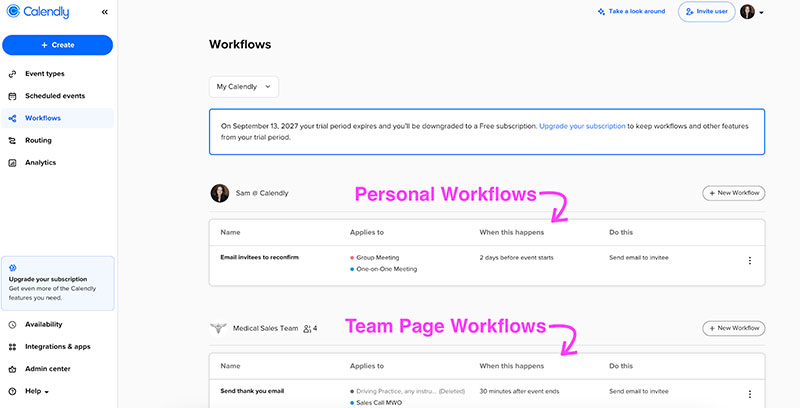
It’s on all paid plans. The triggers cover meeting booked, meeting approaching, meeting completed, and no-show; the actions send email or SMS to the invitee, host, or a third party.
SMS reminders run through Twilio from a random US toll-free number, capped at 180 characters and one-way only. They’re on the Teams and Enterprise plans, not Standard, where you get email workflows only (Calendly Help, 2024).
The Teams plan adds multi-step sequences, so you can chain a confirmation on booking, a reminder at 24 hours, an SMS at 1 hour, and a follow-up afterward. A well-timed appointment confirmation text is one of the simplest ways to cut no-shows, and both platforms support that workflow. Managed Workflows let admins push standardized sequences across every team event type at once.
OnceHub Post-Booking Automation
OnceHub’s confirmations and reminders score 9.6 on G2 against Calendly’s 9.4. The small edge comes from its automated follow-up sequences, which users describe as a structured post-meeting flow nothing else quite matches (Capterra, 2024).
Once meeting data passes into Salesforce or HubSpot, OnceHub leans more on CRM-side triggers. The handoff quality is the strong part; the native workflow builder, less visual and harder to configure than Calendly’s, is the weak one.
Zapier and Third-Party Automation
Both connect to Zapier and Make. Calendly has a lot more pre-built Zap templates, a function of its bigger user base, while OnceHub supports webhooks and API connections but ships with fewer ready-made templates.
For teams wiring Zoom into post-meeting workflows, both generate Zoom links automatically at booking, with the meeting data exposed in Zapier triggers for whatever you build next.
OnceHub vs Calendly: Which One Should You Use?
Neither one is universally better. The answer turns on team size, CRM complexity, and how much routing logic your workflow actually needs.
Choose Calendly If
Calendly is the right call for most use cases, covering individual professionals, SMBs, recruiting teams, and service businesses that want fast setup and reliable performance.
- You need a live booking link in under 10 minutes.
- Payment collection at booking is part of the workflow.
- Group or collective meeting types are on the list.
- Your team is under 20 reps and doesn’t need territory-based routing.
- CRM syncing is useful but not central to rep assignment.
It also makes sense if you want the broadest client recognition. A Calendly link feels familiar to a prospect, since plenty of people have used it as an invitee long before they’d sign up as a host, and that familiarity takes friction off the other side of the booking. If your booking pages live on WordPress, you can extend it through a dedicated Calendly WordPress plugin.
Choose OnceHub If
Sales teams running inbound at scale, specifically where unqualified leads booking with the wrong reps is a real problem costing real pipeline.
OnceHub is the stronger pick when:
- Lead routing to specific reps depends on CRM field matching.
- Meeting-to-opportunity creation in Salesforce has to be automatic.
- HIPAA BAA or FINRA compliance documentation is required.
- Weighted round-robin distribution is needed at 50+ rep scale.
For teams that have outgrown Calendly’s routing but aren’t ready to build custom scheduling infrastructure, OnceHub sits in a useful middle ground. It’s more complex to configure, and the payoff is a routing architecture Calendly doesn’t replicate natively at the Teams tier.
The Bottom Line
For teams under 10 without CRM routing requirements, Calendly’s Standard or Teams plan covers about 90% of scheduling needs at a lower price and far less setup time.
For sales teams above 20 reps where inbound meeting assignment feeds straight into revenue operations, OnceHub’s routing depth earns back the steeper learning curve.
Both handle basic online appointment scheduling reliably, and both connect to the same core platforms, Zoom, Google Calendar, Salesforce, and HubSpot. The decision really comes down to whether you need a booking link or a full meeting scheduler with conditional logic built in.
And this isn’t the only comparison worth running if you’re shopping the space. Matchups like Doodle vs Google Calendar or Acuity Scheduling vs Setmore cover adjacent use cases that might fit your workflow better.
FAQ on OnceHub vs Calendly
Is OnceHub the same as OnceHub?
Yes. OnceHub rebranded as OnceHub, though the OnceHub name still shows up across most integrations, including the Salesforce and HubSpot connectors. Same platform and team, with a broader feature set added under the OnceHub umbrella.
Which is easier to set up, Calendly or OnceHub?
Calendly, by a clear margin. Most users get a live booking link up in under five minutes without touching documentation, while OnceHub needs more configuration time, especially for routing rules and multi-step intake forms. The G2 ease-of-setup scores line up with that, 9.1 for Calendly against 8.2 for OnceHub.
Does Calendly integrate with Salesforce?
Yes, from the Teams plan. It creates leads and logs activity records in Salesforce, though Salesforce routing lookup is Enterprise-only. OnceHub’s integration goes deeper, creating opportunities and tasks straight from its chatbot with no extra configuration.
Which platform is better for small businesses?
Calendly. The free plan covers one event type with unlimited bookings, and paid plans start at $10/seat/month. For a small team without complex CRM routing needs, it’s more value at a lower cost and far less setup overhead. It’s also worth comparing against a WordPress booking plugin if the booking experience needs to live inside your own website.
Does OnceHub support HIPAA compliance?
Yes. OnceHub offers a HIPAA BAA through its Security add-on at $5 to $6/seat/month, which puts it within reach of healthcare teams without the jump to Calendly’s Enterprise tier and its $15,000/year starting point. It also covers GDPR, FINRA, and FERPA. Healthcare practices with more complex workflow needs might also compare therapy scheduling software options built specifically for clinical environments.
Can Calendly collect payments at booking?
Yes. It connects natively to Stripe and PayPal on paid plans, so clients pay as they book. OnceHub supports both as well, but payment is less central to its booking experience, which leans toward sales workflows.
Which tool has better round-robin scheduling?
Both do round-robin. Calendly distributes by availability or equal weighting; OnceHub adds priority weighting and overflow rules, which makes it the stronger pick for large sales teams that need granular control over distribution across 20+ reps. For teams with broader multi-person scheduling needs, the guide to group scheduling apps covers the wider landscape.
Does Calendly send automatic reminders?
Yes, through Workflows on all paid plans. Email reminders come on Standard; SMS reminders need the Teams plan. Calendly’s internal data has 88% of sales professionals reporting fewer no-shows after turning on reminder Workflows (Zeeg, 2026).
What is the main difference between Calendly and OnceHub?
Calendly is built for simplicity and broad adoption, which is why it suits most teams. OnceHub is built for lead routing and CRM automation, so it fits sales operations where inbound meeting assignment ties directly to rep territory, qualification logic, or Salesforce opportunity creation.
Which scheduling tool is better for enterprise teams?
It depends on the use case. Calendly Enterprise adds SSO, SCIM, and audit logs; OnceHub adds weighted routing, a HIPAA BAA, and FINRA compliance at a lower entry price. Regulated industries tend toward OnceHub, while teams chasing broad adoption at scale tend toward Calendly. Either way, understanding the full range of meeting scheduler options before signing a contract is worth the time.
Conclusion
This conclusion is for an article presenting the full picture of OnceHub vs Calendly, two scheduling platforms that solve the same problem in fundamentally different ways.
Calendly wins on simplicity, market adoption, and breadth of use cases. It handles online appointment scheduling for individuals, recruiters, coaches, and SMBs without friction.
OnceHub wins on lead routing depth, CRM workflow automation, and compliance coverage for regulated industries like healthcare and financial services.
Neither tool is wrong. The right choice depends on whether your team needs a booking link or a full meeting distribution system tied to Salesforce, HubSpot, and territory-based assignment logic.
Match the tool to your actual workflow, not the feature list.

Explore topics

Read Inspiring Customer Stories
Check out how our user set Amelia for his business