




Hosting events is one of the few business models where a single well-run afternoon can generate more income than a full month of freelance work.
But most people have no idea how to make money hosting events beyond selling tickets and hoping for the best.
The reality is that event revenue comes from multiple streams at once: sponsorship packages, vendor fees, upsells, and recurring ticket sales. Miss even one of them and you’re leaving real money on the table.
This guide covers everything from ticket pricing strategies and brand partnerships to virtual event income and the tools that keep your margins intact.
By the end, you’ll have a clear picture of how event profitability actually works, and how to build it deliberately.
What Hosting Events for Profit Means
There’s a lot of confusion about this, so let’s clear it up fast. Hosting events for profit and event planning are two completely different roles, and mixing them up is the first mistake most people make.
When you host events for profit, you own the event. You keep the revenue. You also absorb the risk. An event planner, on the other hand, gets paid a flat fee or a percentage to execute someone else’s vision.
That distinction matters a lot when you’re figuring out your business model.
Key difference: With event hosting, your upside is uncapped. Your downside is also real. Poor attendance, a bad venue deal, or a last-minute cancellation can wipe out your margins in one shot.
The profit model depends entirely on which side of the transaction you control. Most people who ask how to make money hosting events are actually asking how to build a recurring event income stream, not just execute a single paid gig.
Both approaches can work. But they require different thinking from day one.
| Role | Revenue Model | Risk Level | Upside |
|---|---|---|---|
| Event Host | Ticket sales, sponsorships, upsells | High (you own the P&L) | Uncapped |
| Event Planner | Fixed fee or % of budget | Low (client bears risk) | Capped at fee |
| Venue Partner | Rental + revenue splits | Moderate | Predictable, recurring |
The event industry data consistently shows that hosts who understand their revenue model from the start outperform those who figure it out mid-planning. Worth knowing before you book anything.
Event Types That Generate the Most Revenue
Not all events are equal when it comes to profit potential. Some formats consistently produce strong margins. Others look great on paper and barely break even.
The global events industry generated $122.28 billion in revenue in 2023 (Brainy Insights), with corporate events and seminars holding the largest single segment share at 32.3%. That tells you where money is actually flowing.
Ticketed Experiences
Workshops, conferences, and niche community events sit at the top for independent hosts. Low venue overhead and high repeat attendance potential make these the most reliable path to event profitability.
- Paid workshops (skills-based, professional development)
- Conferences and summits in specialized industries
- Music and arts events with defined fan communities
- Fitness and wellness events (these have strong fitness event ideas that monetize well)
Corporate and Private Hire Events
Corporate events and seminars were valued at $304.60 billion globally in 2023 (Technavio). This segment grows at 8.86% CAGR, the fastest among all event types.
Private hire sits slightly differently. You negotiate a fixed fee upfront, which removes ticket sales uncertainty. Corporate clients also tend to have larger budgets and clearer briefs.
Niche vs. Broad Events
Vesta’s 2025 Event Trends Report found that only 12.5% of promoters in 2024 saw “plenty of room for new events” in their markets, down from roughly one-third in 2023. Broad events face fierce competition. Niche events with a defined audience and a reason to attend still have real room to grow.
Coachella is the obvious reference point at scale, but locally, a well-run monthly networking event for a specific industry vertical can generate steady recurring event income with almost no overhead. That’s actually the model worth studying.
| Event Format | Revenue Potential | Best For |
|---|---|---|
| Corporate seminars | High (consistent budgets) | Established hosts with B2B networks |
| Ticketed workshops | Medium-high | Niche expertise holders |
| Virtual conferences | Medium (lower overhead) | Global reach, content-heavy formats |
| Recurring community events | Lower per event, higher lifetime value | Audience-building focused hosts |
How Ticket Pricing Works
Pricing is the single decision that affects event revenue more than almost anything else. Set it wrong and you either leave money on the table or kill demand before the event even has momentum.
The average ticket price in 2024 sat around $41.90, with smaller organizers averaging $19 versus $59 for larger events (Vesta 2024). Your price needs to reflect your event’s actual positioning, not just what feels reasonable.
Tiered Pricing
Strategic tiered pricing consistently drives 25-40% more revenue while attracting larger audiences, based on analysis of 1,000+ events (SimpleTix, 2024).
The structure that works:
- Early bird: 25-30% below regular rate, covering first 30% of capacity
- General admission: Core pricing, covering roughly 40% of capacity
- Late tier: 15-20% above regular, as demand builds
- VIP: Premium access with clear differentiation in experience, not just a label
One festival organizer restructured their pricing tiers and added $247,000 in revenue without changing anything else about the event (SimpleTix, 2024). The math is real.
Platforms for Ticket Sales
Choosing the wrong platform quietly kills your margins. Most organizers underestimate how much platform fees affect final revenue per ticket.
Eventbrite and Ticket Tailor are the most commonly used for independent hosts. Eventbrite’s reach is larger, but Ticket Tailor’s flat-fee model often works out better for events with higher ticket volumes. Selling tickets on WordPress is also worth considering if you want to avoid per-ticket commissions entirely and keep the customer relationship on your own domain.
For events using WordPress as a base, options like WooCommerce events calendar integrations can handle ticketing without paying platform fees on every sale. That difference compounds fast at scale.
Free Events That Still Make Money
Free admission is a real strategy, not a fallback. 56% of attendees would use buy now, pay later for tickets over $100, and 51% are more likely to attend if installment payment is available (Eventbrite 2025 TRNDS Report). For free events, the monetization path shifts to sponsorships, upsells on-site, and vendor fees. The event ticket pricing approach changes completely, but the profit potential does not.
Sell More Event Tickets with Amelia
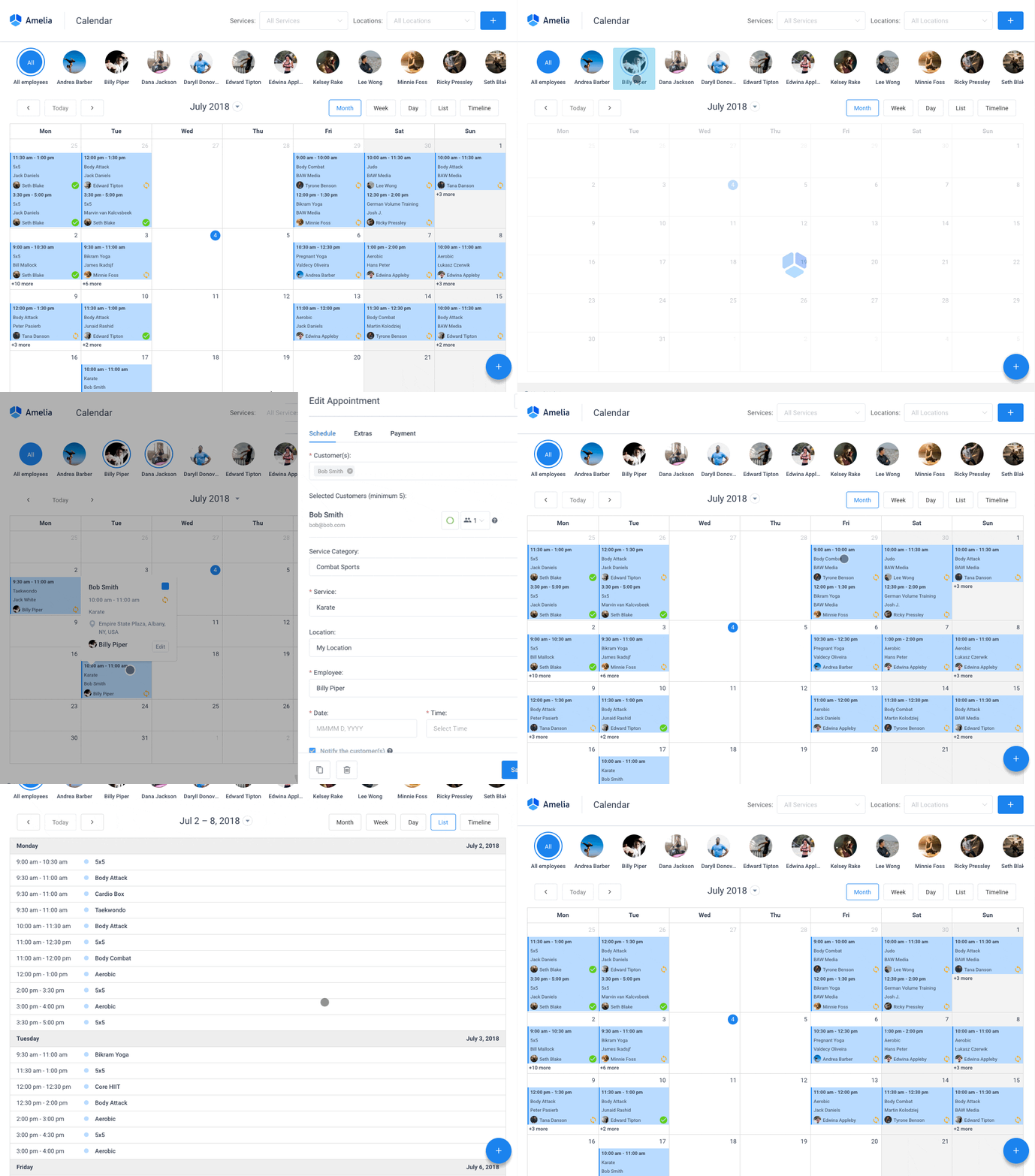
Amelia’s event management plugin handles the full booking process from first click to payment confirmation. Used by 30,000+ event businesses.
What You Get Out of the Box
Flexible ticketing lets you create general admission, VIP, early-bird, age-based, and deposit payment options. Attendees pick what fits them, you pick when sales open and close.
Automated emails go out instantly after purchase, then again as reminders before the event. Fewer no-shows, less manual follow-up.
Real-time availability updates prevent overbooking and keep ticket counts accurate across all sessions.
Payment gateways supported: WooCommerce, PayPal, Stripe, Mollie, and Razorpay. All in one license, no add-ons needed. This makes ecommerce payment processing simpler by supporting multiple popular payment options in one solution.
Reporting and analytics give you a clear view of ticket sales, revenue, and attendee data per event.
Scheduling Options
- Single-day events
- Multi-day events
- Recurring events (daily, weekly, monthly, yearly, or custom schedule)
- Multiple locations per event
Calendar and Booking Views
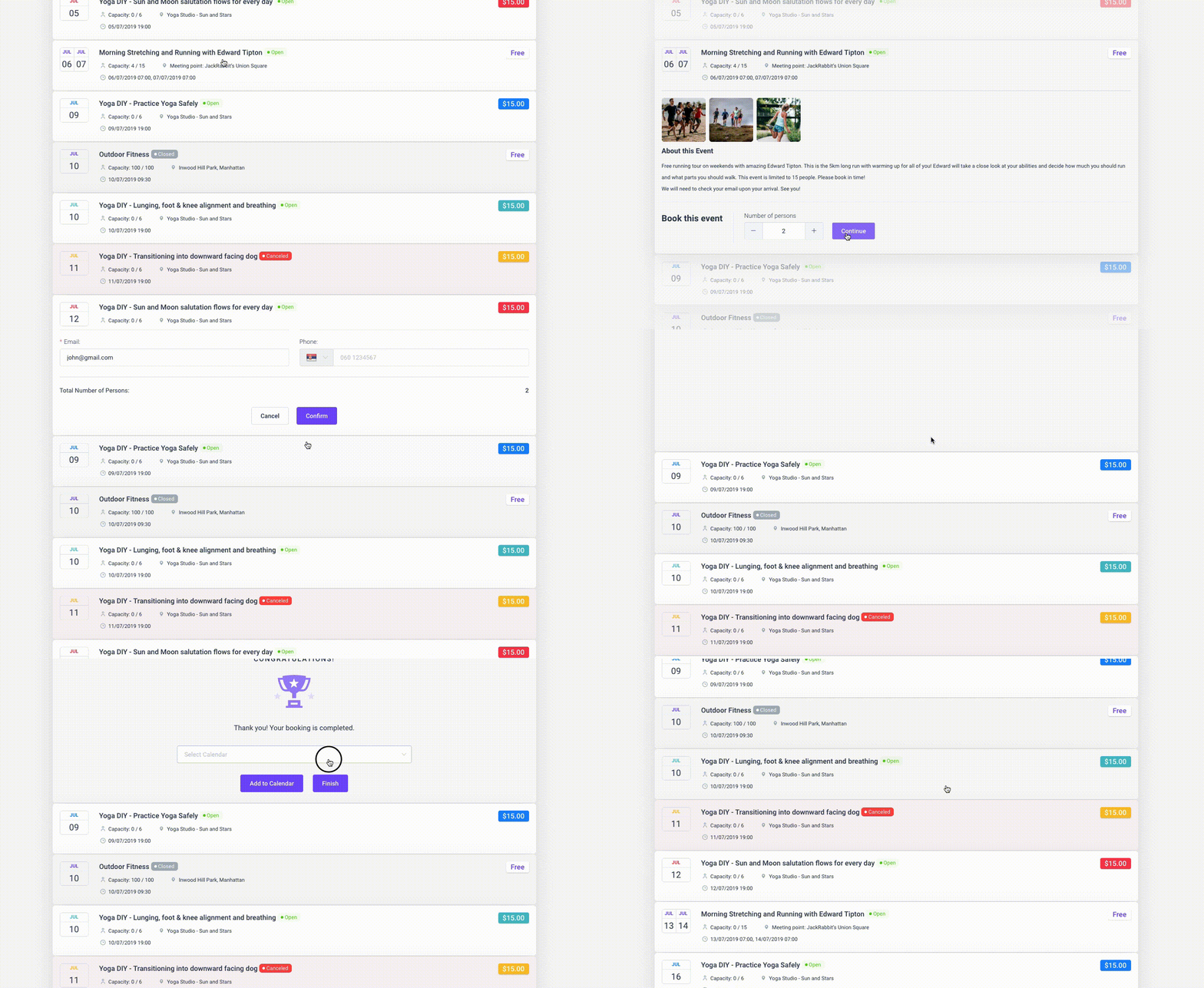
Amelia includes both a calendar view and a list view for displaying events on the front end. Attendees can browse, get event details, and buy tickets without leaving your site.
Integrations
Google Calendar and Outlook sync keep your hosts on schedule. Zoom and Google Meet are supported natively for virtual and online events. Attendees can also add events directly to their own calendars.
Want the full feature list? Check out everything Amelia can do.
Sponsorship and Brand Partnerships
Sponsorship is the most underused revenue stream for independent event hosts. Most people think it’s only for large-scale events. It’s not.
In 2023, $97.4 billion was invested in sponsorship globally, with sponsorship making up 12% of the average brand’s marketing budget (Event Academy). The money is there. Getting access to it comes down to how you package the offer.
What Sponsors Actually Want
Vague exposure is not enough anymore. Sponsors in 2024 want data, qualified leads, and something measurable they can put in front of their leadership team.
Lead generation: Direct access to your attendee list or on-site capture tools.
Brand visibility: Logo placement, stage presence, named sessions. The sponsorship segment held a 46.3% share of the global events industry revenue in 2023 (Allied Market Research), largely because it delivers brand awareness at scale.
Audience data: Demographics, engagement metrics, post-event survey results.
Learn more about how to get sponsors for an event and what a proper outreach process actually looks like. Most event hosts skip the research phase entirely, which is why they get ignored.
Structuring a Sponsorship Package
Sponsors who see strong ROI renew at 70%+ rates and often come back with bigger budgets (Guidebook). Your job is to make the ROI story easy to tell.
- Title sponsorship (naming rights, maximum visibility)
- Category sponsorship (exclusive rights to a vertical like “official tech partner”)
- Session or stage sponsorship (tied to specific programming)
- Local business sponsorship (smaller dollar amounts, easier to close)
An event proposal template helps structure these conversations. Before you send anything, treat the outreach like a sales proposal: lead with the audience data, show the ROI clearly, and make the ask specific. Sending a well-formatted deck with tiered package options converts far better than a casual email pitch.
Also, 91% of large-scale event hosts generate revenue through sponsorship-based sessions (Markletic). Even mid-size events can use this model by letting sponsors “own” a breakout session or workshop slot.
Venue and Vendor Revenue Splits
This section covers money most first-time hosts completely miss. The arrangement between you and your venue or vendors can either add a meaningful revenue stream or quietly drain your margins depending on how you negotiate it.
Food and beverage sales are the biggest revenue driver after ticket sales for event organizers, according to Eventbrite’s 2025 TRNDS Report. Live Nation data confirms on-site per-attendee spending topped $40 at amphitheater shows in 2023.
Bar and Catering Splits
Negotiating a revenue share on bar and food sales is standard practice in venue agreements. Most venues default to keeping 100% of F&B revenue. You can push back on this, especially if you’re bringing volume.
A split of 15-25% on bar revenue is realistic for hosts bringing 200+ attendees. Less than that and it probably is not worth complicating the agreement.
Vendor Table Fees
Markets, pop-ups, and expos use this model regularly. You charge vendors a flat fee for table or booth space, usually $50 to $500 depending on event size and foot traffic expectations.
- This revenue is collected upfront, before a single ticket sells
- Vendors also help promote the event to their own audiences
- Works especially well for craft markets, wellness expos, and trade-style events
Co-Hosting Arrangements
Co-hosting splits both costs and profits between two or more organizers. This reduces your financial exposure significantly, especially for a first event in a new format or location.
The tradeoff: You give up some control over decisions and split the upside. Worth it early on, less so once you’ve proven the model.
One practical approach is partnering with a venue directly as a co-promoter rather than renting the space outright. The venue takes a percentage of ticket revenue instead of a flat rental fee. Your upfront cost drops to near zero. Their incentive to help fill the room goes up. Taken seriously, this is one of the more underrated ways to reduce the cost structure of event hosting as a business.
Upsells and Add-On Revenue Streams
Ticket revenue gets most of the attention. Upsells are where experienced hosts actually build their margins.
Two in five consumers are willing to pay extra for an event focused on community building, and 51% are more likely to attend if flexible payment options exist (Eventbrite 2025 TRNDS Report). That willingness to spend more extends well beyond the ticket itself.
On-Site Upsells
Meet-and-greets, backstage access, early entry, and reserved seating all convert well when they are offered clearly and early. The mistake is waiting until the event to mention them.
Merchandise is another consistent performer. Coachella reportedly generates tens of millions annually from branded merchandise alone, but even a small local event can build meaningful merch revenue with a focused approach.
Selling relevant and valuable merchandise, meaning products your specific audience actually wants rather than generic branded items, is what separates merch that moves from merch that sits in a box after the event. A few hundred dollars in upfront inventory can return two to three times that on the day.
If your event has a content angle, pairing it with a podcast adds another layer of interaction with your audience and opens up additional monetization options between events.
Post-Event Revenue
This one surprises people. The event ending does not mean the revenue stops.
- Replay recordings sold as on-demand access
- Session slides or workshop materials packaged as downloads
- Photo packages from event photographers
- Follow-up online courses tied to event content
For digital content specifically, a WordPress plugin for online courses lets you package recorded sessions into a paid course without building a separate platform.
VIP and Premium Experiences
VIP pricing targets attendees willing to pay more for enhanced experiences and can significantly increase per-ticket revenue while serving your highest-value customers.
The key is real differentiation. “VIP” needs to mean something tangible, not just a different coloured wristband. Priority seating, dedicated staff, private networking sessions, exclusive speaker access. These justify a 2-4x premium over general admission when delivered well.
Done right, upsells can add 30-50% on top of base ticket revenue without adding proportional costs. That is where event profit margins actually move.
Virtual and Hybrid Events as a Revenue Channel
Virtual events are not just a backup for when in-person is too expensive. They are a full revenue model on their own. The global virtual events market hit $98.07 billion in 2024 and is projected to reach $297.16 billion by 2030 at a 20% CAGR (Grand View Research).
That growth matters for independent hosts. Lower production costs, no venue deposits, and broader audience reach make virtual formats genuinely attractive, not just convenient.
Revenue Breakdown by Format
Virtual events generate 12% more revenue per attendee compared to in-person events on average, and save around $42,000 per event in overhead (99firms). That margin difference is what makes them worth taking seriously.
| Format | Cost Profile | Revenue Upside | Best For |
|---|---|---|---|
| In-person | High (venue, AV, catering) | Highest per-attendee spend | Premium, experiential events |
| Virtual | Low (platform fees only) | Higher margin per ticket | Webinars, summits, courses |
| Hybrid | Medium | Up to 15% revenue lift | Conferences with global audience |
Platforms Worth Using
Platform choice affects both the attendee experience and your net revenue. Most hosts start with Zoom Events or Hopin for simplicity. Airmeet and Riverside work better when you want broadcast-quality output with replay potential built in.
If your events are content-heavy and you want to build a library of recorded sessions, distributing through an OTT platform lets you sell on-demand access long after the live event ends, without relying on a third-party ticketing site to host the content.
For WordPress-based operations, an EventOn integration or a dedicated virtual events calendar handles registration and scheduling without sending attendees to third-party platforms.
Hybrid Events
Hybrid events can increase attendance by up to 50% and boost attendee engagement by as much as 80%, according to ElectroIQ 2024 data. The ROI case is strong. 86% of B2B organizations report a positive return from hybrid events within 7 months (Markletic).
Worth knowing: hybrid event ideas do not require enormous production budgets. A livestream component added to an existing in-person workshop is enough to open a second revenue stream through virtual ticket sales.
Costs That Kill Event Profits
Profit margins in event hosting are not lost at the ticket pricing stage. They erode during execution, through costs that compound quietly until the final P&L looks nothing like the original plan.
Food and beverage represents the largest expense area for planners at 73%, followed by AV setups at 66% and venue costs at 29% (Fielddrive 2025). Knowing this does not automatically save money. Understanding which of these you can control does.
The Venue Deal
Venue deposits and hidden fees are the most common first hit. Always negotiate the full fee structure upfront, including setup and breakdown time, which venues frequently charge separately.
Watch for: overtime charges, mandatory AV packages at inflated rates, minimum F&B spends that exceed your realistic consumption, and cleaning fees that arrive after the event.
One Studio 87 venue owner in Baltimore documented a clear pattern: the events that drained margins were almost always ones where the fee structure was agreed verbally rather than in writing.
Catering Over-Orders
Catering overproduction costs operators 5-12% of total food cost on average (Wexford Insurance, 2025). For an event with $8,000 in catering, that is $400-$960 leaving your margin for no reason.
Set hard RSVP deadlines and use attendance tracking tools. Order to 85-90% of confirmed attendees, not 100%.
Marketing Without Tracking
Event promoters expanded their average marketing channels from 4.79 in 2022 to 9.5 in 2024 (Vesta 2025). More channels without attribution data means more spend with no clarity on what actually sold tickets. Before launching any marketing campaign, map out exactly which actions you want to track and set up your UTM parameters first.
- Use UTM parameters on every promotional link
- Track which channel drove registrations, not just clicks
- Cut channels that produce traffic but no conversions
Refunds and Chargebacks
A permissive refund policy combined with poor cancellation terms is a fast way to lose event revenue after the fact. Set clear terms at checkout. Use platforms that support partial refund structures so you are not forced to issue full refunds for late cancellations.
Stripe and Square both handle chargeback disputes better than manual invoicing. Worth factoring into your payment setup early rather than after a dispute arrives.
Tools and Platforms for Managing Event Revenue
The tools you use affect how much you actually keep from every ticket sold. Platform fees compound at scale. Getting this stack right matters.
Eventbrite reported $326 million in revenue in 2024, a 23% year-over-year increase, driven by a 40% surge in paid creators (PortersFiveForce). That growth tells you the ecosystem is busy and competitive, so platform choice is a real decision.
Ticketing Platforms Compared
| Platform | Fee Structure | Best For |
|---|---|---|
| Eventbrite | 3.5–7.5% + fixed per-ticket fee | Discovery, large audiences |
| Ticket Tailor | Flat monthly fee | High-volume recurring events |
| Luma | Free for most events | Community and niche events |
| WordPress plugins | One-time cost or subscription | Hosts who own their audience |
For WordPress-based event hosting, WordPress Eventbrite integration brings ticketing into your existing site without losing Eventbrite’s discovery reach. Alternatively, Event Espresso or WP Event Manager handle registration natively with no per-ticket commissions.
Payment Processing
Stripe is the default choice for most independent event hosts. Instant daily payouts improve cash flow significantly compared to platforms that hold funds until after the event. Square works well for on-site sales, particularly merchandise and upsells during the event itself.
For events with attendee registration through WordPress, a PayPal booking system or a WordPress event registration form with Stripe connected handles checkout without relying on third-party ticketing commissions.
P&L Tracking
Most organizers track ticket sales but miss the full cost picture. QuickBooks or a simple spreadsheet with consistent categories gives you the data you need to run a real break-even analysis before committing to the next event.
Track: ticket revenue by tier, sponsorship income, vendor fees collected, upsell revenue, and then costs line by line. Vague “event expenses” categories are useless for improving margins on the next event.
Email and CRM Tools
Organic social media and email marketing drive the most tickets sold for repeat events, according to Vesta 2025. Mailchimp and ConvertKit both integrate directly with Eventbrite and most WordPress ticketing plugins, keeping your attendee list in one place across events.
Julia McCoy, who hosted Content Hacker Live in Austin in 2024, sold 200 tickets primarily through 50+ targeted emails to an engaged list of under 5,000 subscribers, confirming that list quality outperforms list size every time (Beehiiv, 2024).
Scaling from One Event to a Recurring Business
Email is the most reliable channel. According to Vesta 2025, organic social and email drive more ticket sales than paid channels for events with repeat audiences.
Running a content marketing campaign between events, whether that is a newsletter, a short video series, or a behind-the-scenes blog, keeps your audience engaged and reduces how much you need to spend on paid promotion for each new ticket launch. Your list from event one is your marketing budget for event two.
Teams that adopted event-led growth strategies were 75% more likely to see over 50% revenue growth in 2023 compared to those who did not (Splash 2024). The difference is treating events as a repeatable system, not a one-off project.
Audience Between Events
The work that scales an event business happens between events, not during them. Solid event marketing does not start the week before tickets go live. It runs continuously, keeping your audience warm between launches so you are not starting from zero every time.
- Build an email list from every event, not just a post-event thank you sequence
- Create a community space (Slack, Discord, Facebook Group) that stays active between events
- Send content between events so your list stays warm, not just active during ticket launches
Email is the most reliable channel. According to Vesta 2025, organic social and email drive more ticket sales than paid channels for events with repeat audiences. Your list from event one is your marketing budget for event two.
Cadence and Format Decisions
Annual vs. monthly events is a real strategic decision that most new hosts skip. Monthly recurring events build audience familiarity faster but require much lower production overhead. Annual events justify higher ticket prices and larger sponsorship packages.
A single event marketer planned an average of 14 events in 2023, roughly one per month (Splash 2024). At that volume, systematizing everything, from venue contracts to ticketing flows, is what separates profitable operations from chaotic ones. Good event management skills compound here. The more organized you are behind the scenes, the more you can actually produce.
When to Register as a Business
Once you move past your first two or three events and revenue becomes consistent, operating as a sole trader is a real liability risk. Sponsorship agreements and venue contracts become more favorable once you have a registered business entity, an operating agreement, and a business bank account.
Consulting a local accountant before signing your first major sponsorship deal costs a few hundred dollars. Getting hit with unexpected tax exposure on event revenue costs considerably more. Good event planning resources will flag this, but it’s one of those things most new hosts find out the hard way.
Licensing and Expansion
Once you’ve proven a format works, you have options beyond just running the same event again. Licensing your event concept to organizers in other cities, franchising the format, or creating a digital version for virtual access all let you grow revenue without proportionally growing your workload.
This is where the real upside in event hosting as a business lives. Not in running more events yourself, but in owning a format that others want to replicate.
FAQ on How To Make Money Hosting Events
How much money can you make hosting events?
It varies widely. Small recurring events can generate $500-$3,000 per event. Larger ticketed experiences with sponsorship and upsells can produce $10,000-$50,000 or more. Event profitability depends heavily on your pricing model and cost control.
What types of events make the most money?
Corporate seminars, paid workshops, and niche conferences consistently generate the strongest margins. Private hire events offer predictable income with less risk. Recurring event income from monthly community formats builds the most reliable revenue over time.
Do you need a large audience to profit from hosting events?
No. A focused audience of 50-100 people paying premium ticket prices outperforms a crowd of 500 paying very little. Niche events with high willingness to pay deliver better event revenue streams than broad, low-ticket formats.
How do event hosts make money beyond ticket sales?
Sponsorship packages, vendor table fees, merchandise, VIP upsells, and post-event replay sales all add income. Food and beverage revenue splits with venues are another option. Most profitable hosts use at least three of these simultaneously.
How do you get sponsors for an event?
Build a sponsorship deck with audience data, attendance projections, and tiered packages. Approach local businesses first. Brand partnerships convert better when sponsors see clear ROI potential, such as lead capture, logo placement, or named sessions.
What platforms are best for selling event tickets online?
Eventbrite suits hosts who need built-in discovery. Ticket Tailor works better for high-volume recurring events due to flat-fee pricing. Luma is free and strong for community formats. WordPress plugins eliminate per-ticket commissions entirely for established audiences.
How do virtual events generate revenue?
Through ticket sales, sponsored sessions, on-demand replay access, and digital upsells. Virtual events save roughly $42,000 per event in overhead costs on average. Hybrid event revenue adds a second income stream by selling both in-person and online access.
What costs most commonly kill event profit margins?
Venue hidden fees, catering over-orders, untracked marketing spend, and loose refund policies. AV costs and last-minute staffing changes hit hardest. Running a proper break-even analysis before booking anything is the most reliable way to protect margins.
How do you turn a one-off event into a recurring business?
Build an email list from every event and keep the audience engaged between events. Systematize your venue, ticketing, and sponsorship processes. Recurring events with a defined format and loyal audience are far easier to sell and scale than one-offs.
Do you need to register a business to host paid events?
Not for your first event, but once revenue is consistent, a registered entity protects you legally and makes sponsorship contracts easier to close. Most hosts formalize after their second or third profitable event to manage tax and liability properly.
Conclusion
This conclusion is for an article presenting a complete picture of how to make money hosting events, from your first ticketed workshop to a fully recurring event business.
The path is clearer than most people expect. Pick the right event format, layer in multiple revenue streams, and control your costs before they control you.
Sponsorship packages, vendor fees, upsells, and virtual ticket sales do not require a massive audience. They require a plan.
Tools like Eventbrite, Stripe, and Mailchimp keep your event registration and payment flows tight, so you spend less time on admin and more time building attendance.
Start with one format. Prove the model. Then scale it.

Explore topics

Read Inspiring Customer Stories
Check out how our user set Amelia for his business