




Choosing the right pricing model can make a big difference in how customers book your services and how predictable your revenue feels.
For many service-based businesses, the choice comes down to two common options: per-person pricing or flat rate pricing.
At first, the difference seems simple. Pricing per-person means the final price changes based on how many people are included in the booking. A flat fee means the customer pays one fixed price for the service, no matter how many people attend or participate.
But in practice, the better option depends on your business type, your costs, your booking flow, and what your customers expect.
For example, a private yoga class, a boat tour, a consultation, and a group workshop may all need completely different pricing logic. Some services work better when every additional person increases the price. Others are easier to sell when the customer sees one clear fixed amount.
In this guide, we’ll break down how both pricing models work, when to use each one, and how Amelia helps you manage flexible service pricing without making the booking process confusing.
What Is Pricing Per Person?
Pricing per person means the customer pays based on the number of people included in the booking.
Instead of charging one fixed amount for the service, the price increases depending on the number of participants.
For example:
- A guided tour costs $40 per person
- A group fitness class costs $25 per participant
- A wine tasting costs $60 per guest
- A children’s party package costs $15 per child
So, if one person books a tour, they pay $40. If four people book together, the total becomes $160.
This model is common for services where your cost, capacity, or workload increases with every additional person.
When pricing per person makes sense
Pricing per person usually works best when each extra participant adds value, effort, supplies, space, or time.
A good example is a class or event where each person needs a seat, materials, equipment, or individual attention. If you charge the same amount for one person and ten people, you may quickly lose money or overload your staff.
This pricing model is also useful when your service naturally feels like a ticketed experience. Customers already expect to pay per guest for things like tours, workshops, tastings, classes, and group activities.
In those cases, per-person pricing feels fair because the customer understands what they are paying for.
Free Appointment Pricing Calculator
What Is Flat Rate Pricing?
Flat rate pricing is when fixed prices are charged for a service, regardless of how many people are involved.
For example:
- A business consultation costs $150
- A private room rental costs $300
- A cleaning service costs $120
- A photoshoot package costs $500
- A private training session costs $80
The customer sees one price, books the service, and pays that amount.
Flat rate pricing, or flat fees, is simple, predictable, and easy to understand. It works especially well when the service has a fixed scope or when the number of participants does not significantly change the amount of work involved.
When flat rate pricing makes sense
Flat rate pricing is a strong choice when your service is based on time, expertise, access, or a defined package.
For example, if you offer a one-hour strategy consultation, your time commitment stays the same whether the client asks one question or five. The customer is paying for your expertise and booked time, not for the number of people involved.
Flat fees also work well when you want to keep pricing simple. A fixed price removes hesitation because customers do not have to calculate the final cost themselves.
This is especially useful for services where customers want clarity before booking, such as coaching sessions, consultations, repair services, beauty treatments, or professional appointments.
Per-Person Pricing vs Flat Rate Pricing: The Main Difference
The main difference is how the final price is calculated.
With pricing per person, the total changes based on the number of participants.
With flat rate pricing, the price stays the same no matter how many people are included, unless you manually create different packages or add-ons.
Here is a simple comparison:
| Pricing model | Best for | Main benefit |
| Pricing per person | Group services, tours, classes, workshops, events | Fair pricing based on attendance |
| Flat rate pricing | Consultations, appointments, private services, fixed packages | Simple and predictable pricing |
Neither model is automatically better. The right choice depends on what your service actually requires.
A mistake many businesses make is choosing the model that looks easier, not the one that fits their real costs. That can lead to undercharging, customer confusion, or booking problems later.
Benefits of Pricing Per Person
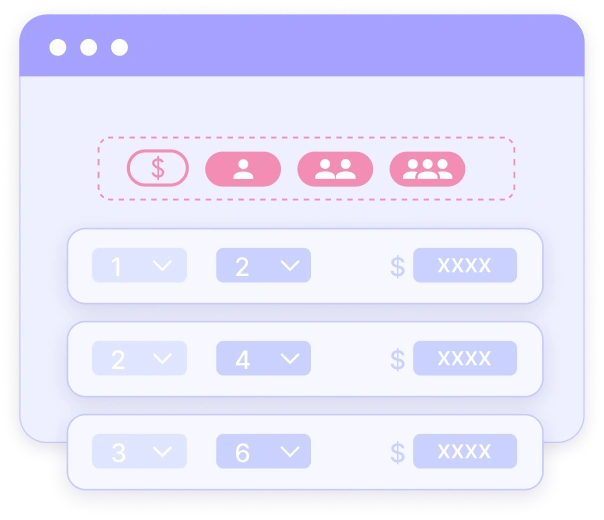
Pricing per person gives you more flexibility when your services involve groups or variable attendance.
It reflects the real cost of serving more people
If each extra participant increases your costs, per-person pricing protects your margins.
This matters for businesses that provide materials, food, equipment, seats, staff support, or individual guidance. Every extra person may require more resources, so your pricing should reflect that.
For example, a cooking workshop may need ingredients for each participant. A guided activity may need equipment for every guest. A spa group package may require extra staff or longer preparation time.
In these cases, charging per person is not just logical. It is necessary.
It makes group bookings easier
Per-person pricing also makes group bookings more straightforward.
Instead of asking customers to call you for a custom quote, you can let them select the number of people during booking. The system calculates the total automatically, and the customer can complete the booking without back-and-forth messages.
This creates a smoother booking process and saves time for both sides.
It helps you maximize revenue
If your service has limited capacity, every spot matters.
Per-person pricing helps you make better use of available space. If a class can hold 12 people, charging per participant allows revenue to grow as attendance grows.
Flat pricing may limit your earning potential if you charge one fixed price for the whole group but allow multiple people to join.
Downsides of Pricing Per Person
Pricing per person is useful, but it is not always the best choice.
It can make pricing feel more complicated
Some customers prefer seeing one simple price. If they need to adjust the number of people and watch the price change, they may take longer to decide.
This is not always a problem, but it matters for services where customers expect quick booking.
For example, someone booking a haircut, a consultation, or a repair appointment usually does not want to think about participant-based pricing.
It may create price sensitivity
When customers see the total increase with each person, they may become more careful about adding participants.
That can be good if your capacity is limited, but it can also reduce larger bookings if the total starts to feel too high.
This is why some businesses use flexible pricing, like group discounts or tiered pricing:
- $50 per person for 1-3 people
- $45 per person for 4-6 people
- $40 per person for 7+ people
This keeps pricing flexible while encouraging bigger bookings.
Benefits of Flat Rate Pricing
Flat fees are popular because they are easy to understand and easy to sell.
They make the booking decision faster
A fixed price removes mental math.
The customer does not need to calculate anything or wonder how the final amount will change. They see the service, the price, the available time slots, and they book.
This works especially well for appointment-based businesses where speed and clarity matter.
They make your offer feel more defined
Flat fees can make your service feel like a clear package.
For example, “60-minute consultation – $120” feels specific and professional. The customer knows what they are getting and what they are paying.
This can also make your services easier to compare, promote, and explain on your website.
They are easier to manage
From the business side, flat fees are simple.
You do not need to think about participant counts, group sizes, or variable pricing rules. This can be a better option for small teams, solo service providers, or businesses with straightforward appointment types.
Downsides of Flat Rate Pricing
Flat fees are simple, but they can become a problem if your service is not actually fixed.
You can undercharge for larger groups
If your flat fee covers a group booking, you need to be careful.
Let’s say you charge $200 for a private workshop and allow up to 10 people. If one person books, $200 may be fine. But if 10 people attend and you need to provide materials, support, and preparation for each one, that same $200 may not cover your real costs.
In this case, a flat fee can quietly reduce your profit.
It may not feel fair for smaller bookings
Flat fees can also feel expensive for small groups.
If a service costs $300 whether one person or six people attend, a solo customer may feel like they are paying too much. That can stop them from booking, even if the price makes sense for larger groups.
This is where per-person pricing can feel more flexible and fair.
How to Choose the Right Pricing Model
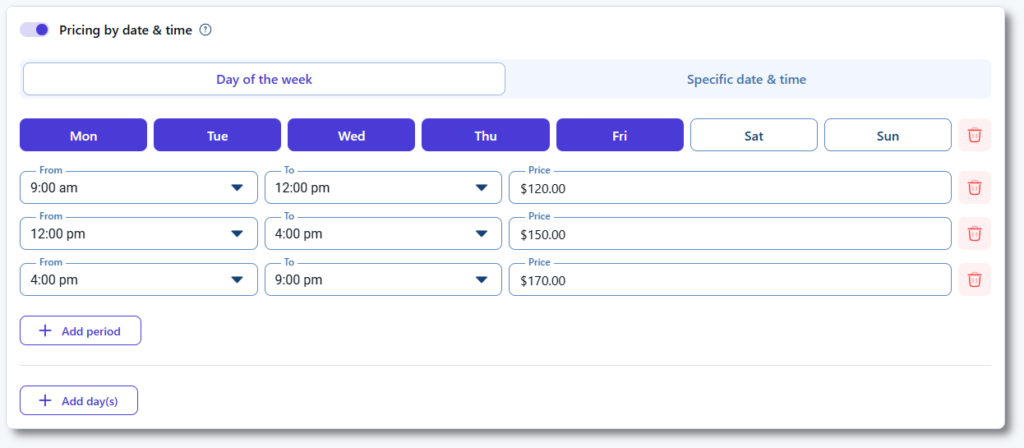
The best pricing model depends on your service structure.
A simple way to decide is to ask: Does every additional person increase the cost or workload?
If the answer is yes, pricing per person is probably better.
If the answer is no, a flat fee may be the cleaner choice.
Choose pricing per person if…
Pricing per person is usually the better fit if your service involves:
- Group classes
- Tours
- Workshops
- Events
- Tastings
- Team activities
- Kids’ parties
- Fitness sessions
- Training programs
- Services with limited seats
- Services that require supplies per guest
It is also the better choice if your customers usually book for more than one person at a time.
For example, tour operators, educators, wellness studios, and event-based businesses often benefit from this model because it matches how their services are consumed.
Choose flat fees if…
Flat fees are usually better if your service is based on:
- Time
- Expertise
- A fixed appointment
- A defined package
- Access to a space
- One-on-one service
- A simple deliverable
This works well for consultants, coaches, salons, clinics, repair businesses, freelancers, and other appointment-based service providers.
A flat fee is also the right choice when your main goal is to make booking feel fast and simple.
Can You Use Both Pricing Models?
Yes, and in many cases, you should.
Some businesses need both pricing per person and flat fees because not all services are structured the same way.
For example, a wellness studio might offer:
- A private massage with a flat fee
- A yoga class priced per person
- A private group session with a base price plus extra participants
- A workshop with ticket-style pricing
Using only one pricing model for every service may force you into pricing that does not fit.
A better approach is to match the pricing model to each service.
This gives you more control and helps customers understand the value of what they are booking.
How Amelia Helps You Manage Service Pricing
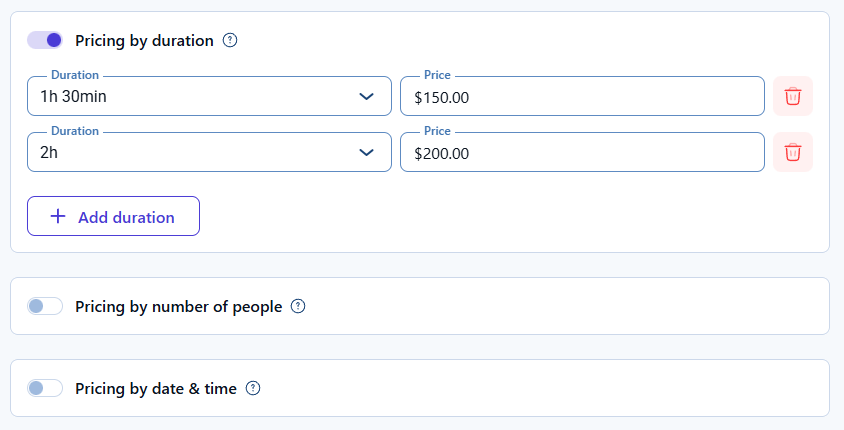
Amelia makes it easier to set up different pricing structures for different types of services.
Instead of handling bookings manually or calculating prices through messages, you can create services with clear pricing, capacity, employees, time slots, and booking rules.
For businesses that offer group services, Amelia can help customers book for multiple people and see the correct pricing during the booking process.
For businesses that use fixed service prices, Amelia keeps the booking flow simple and direct. Customers choose a service, pick a time, and confirm their appointment.
This custom pricing is important because real businesses rarely have one perfect pricing model for everything.
Better booking experience for customers
Customers do not want a confusing booking process.
They want to know:
- What the service includes
- How much it costs
- When it is available
- How to confirm their spot
When your pricing model is clear, the entire booking experience feels easier.
Per-person pricing helps customers understand group costs upfront. Flat fees help them make quick decisions without extra steps.
With Amelia, you can build a booking flow that matches the way your services are actually sold.
Less manual work for your team
The more complex your pricing is, the more time your team can lose answering repetitive questions.
“How much is it for three people?”
“Do kids count as participants?”
“What if I bring one more guest?”
“Is the price per session or per person?”
A clear online booking system reduces those questions because customers can see the pricing logic before they book.
That means fewer manual quotes, fewer mistakes, and less back-and-forth communication.
Common Pricing Mistakes to Avoid
Choosing between per-person pricing and flat fees is not only about preference. It is also about avoiding pricing problems that hurt your business later.
Mistake 1: Using flat fees for services that scale with group size
If your costs grow with every participant, a flat fee can quickly become risky.
You may get more bookings, but those bookings may not be profitable.
Before setting a flat price, calculate what happens when the maximum number of people attend.
If the numbers do not work at full capacity, your pricing needs to change.
Mistake 2: Making per-person pricing too hard to understand
Per-person pricing should be clear from the beginning.
Do not hide important pricing details until the final step. If customers feel surprised by the total, they may abandon the booking.
Make it obvious whether the price is per person, per session, per group, or per package.
Mistake 3: Ignoring minimum booking requirements
Some services only make sense if enough people attend.
For example, a workshop may not be profitable for one participant. A tour may require at least four guests. A private event may need a minimum spend.
In those cases, consider setting minimum participant rules, minimum prices, or package options.
Mistake 4: Not reviewing pricing over time
Your pricing model should not stay the same forever.
Costs change. Demand changes. Your services change. Customer behavior changes too.
Review your booking data regularly. If people often book in groups, per-person pricing may work better. If customers hesitate because pricing feels too variable, a flat fee or package model may be stronger.
Per-Person Pricing vs. Flat Rate Pricing: Which One Fits Your Service?
Pricing per person is best when each additional participant affects your cost, capacity, or workload. It is a strong fit for group-based services, classes, workshops, tours, events, and activities where every guest matters.
Flat fees are best when your service has a fixed scope, fixed duration, or fixed value. They are ideal for consultations, appointments, private sessions, and simple service packages where customers benefit from one clear price.
The real answer is not that one model is better than the other. The better choice is the one that matches how your service works.
If your service changes with the number of people, use pricing per person.
If your service stays mostly the same regardless of participants, use a flat fee.
And if your business offers different types of services, use both.
With Amelia, you can create a booking setup that supports the way your business actually sells services, instead of forcing every offer into the same pricing structure. That means clearer prices for customers, fewer manual questions for your team, and a booking process that feels much easier from start to finish.

Explore topics

Read Inspiring Customer Stories
Check out how our user set Amelia for his business